episode 54:
The Mental Health Benefits of Being Outside

Or Listen On:


Show Notes
In this episode, I’m out on a fall hike in the Chugach exploring a question that feels central to so much of what we do here: why does being outside feel so good for our mental health and nervous systems?
We explore some of the nervous system processes that might help explain the magic — starting with orienting and the way being outside naturally asks us to use our senses, pay attention to our environment, and stay connected to what’s happening around us. I also talk about how outdoor experience itself is a skill, and why all that sensory information can sometimes feel stressful before our bodies become more practiced at interpreting it.
From there, we get into bilateral stimulation, rhythm, and coregulation — including what happens when we move both sides of our bodies, find our own rhythm, or fall into a shared rhythm with other people. And finally, we explore some of the harder-to-explain gifts of being outside: beauty, awe, connection with the land, and the ways nature can model how to move through change, intensity, and cycles.
This episode is an invitation to notice what happens in your body when you spend time outside — and to get curious about all the ways the land, movement, beauty, and rhythm might be supporting you.
Timestamps
00:00 — The mental health benefits of being outside
02:00 — Finding more to say after a radio interview
04:00 — Fall events + getting ready for winter training
08:00 — Somatics, winter training + upcoming community events
11:00 — Why being outside supports the nervous system
12:00 — Orienting: using our senses outside
15:00 — Outdoor experience as a nervous system skill
17:00 — Orienting + resourcing in nature
19:00 — Why modern life gives us fewer chances to orient
21:00 — Bilateral stimulation + movement
23:00 — Rhythm, shared rhythm + coregulation
25:00 — Finding safety in your own rhythm
27:00 — Nature as a model for moving through challenges
29:00 — Trees, rivers + seaweed as somatic resources
31:00 — Beauty, awe + the nervous system
33:00 — The social impulse to share awe
34:00 — Closing reflections + how does being outside support you?
Submit your questions for the Q&A [here]
Photos and links from this episode:
www.mindandmountain.co/podcast
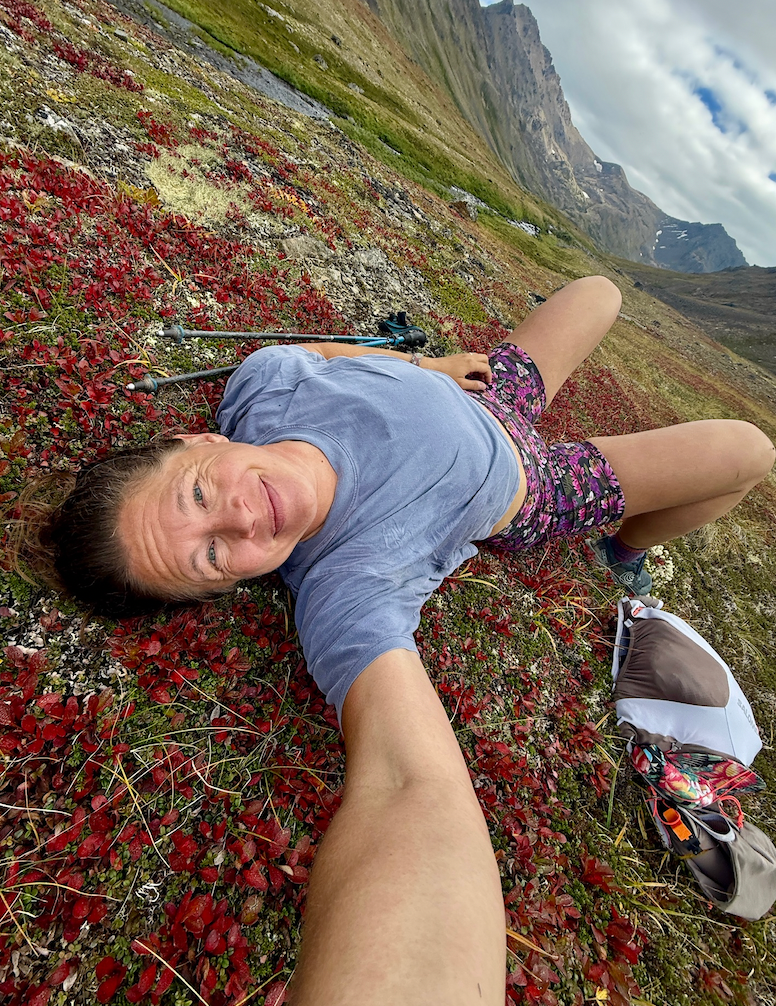
tundra time
Transcript
Hello, co-regulation conversations. Welcome back. Welcome to my hike here on a beautiful fall day in the Chugach. Maybe you can hear the water of this creek that I'm hiking above, and maybe the rustle of some of the bushes alongside me, or the breeze in the grass or the leaves. It's been a really nice day, and I wanted to talk to you today about the mental health benefits of being outside, and this this conversation was inspired by a question I got asked this week on a radio interview with Alaska Public Media program that's coming out in a few weeks, but the interviewer asked me at one point what the yeah to talk about the mental health benefits of being in nature, and I I had one answer that I'm happy with, but there's a lot that I left out, and I sort of feel like I fumbled that question a bit. And darn, because I have a lot to say about that. So this is part of my personal practice that I'm building around public speaking and times when I'm like using my voice in the world, and you know, part of that process for me has been recognizing that there are times when you just don't get all the words out in the way I wish I would have, or freeze up, or there's just more to say after the fact, you know. And yeah, so that used to really bother me, and then I would kind of spiral About yeah, not having done as good of a job as I could have, and so something I am developing is this personal practice of realizing when there's more that once could be said, and then looking for a place to do that, and just using that impulse to share more in a different place feels like it's helped that process quite a lot. So yeah, so that's some of what I'm here to do. I have more to say about that question, and so, yeah. Let's get into it. I guess before I do, I want to make mention of announcement-wise the upcoming events that we have for winter preseason 2026. The Ski Babes program is going to kick off on october 12, and that's about six weeks away. If you're listening to this in real time, maybe more like five, depending on when this comes out. And so, this is a like training-wise, this is our point in the year where it can be really nice to start an on-ramp to your winter training program, and that whether you're doing ski babes or not, if you have winter goals, I'd be thinking about like what what would the on-ramp to that plan look like I really like this two day a week balance training program that is one of the very first programs that I filmed when I was putting Minded Mountain transitioning it from in person to on the internet and it's just really, it's really sweet. It's two days a week feels nice. Starting to build some muscles and some balance and some interoception without too much plie. Metric jumpy stuff or intense cardio stuff. It's like more in the moderate realm on those two fronts, and that can be a really helpful baseline kind of thing. So if you're transitioning out of summer into winter, or if you're transitioning out of like a softer phase or a quieter phase, and you want to get going into a different mode for this summer, I would invite you into yeah the Manchester Mountain Training membership. Start up with balance training. Here's what I would have you do: start up with balance training as soon as you get in there, and then when I start launching the Ski Babes program, we have a handful of live events. Some of them, one in-person Anchorage people, please come. I would love to see you. It's on the 28th, I believe, of October, September. We'll link this all up in the show notes. But there's an Anchorage event. It's a 10-year party and social hour. Come to the workout, or come to the social hour, or come to both. Yeah, please pre-register for that if you can. At least for the workout, we can have whoever at the social hour, but at least for the workout, we want space for everybody. But we do want to pack the place, so please come celebrate with me.
Speaker 1 6:29
We have a handful of other events that we're planning, including a testimonial drive where we're fundraising for the Defend the Sacred Arctic efforts and yeah, what else? Oh yeah, then then the the on Zoom ones, two different Zoom workouts that I'm teaching this fall live in person and online, and all of that. Those are fundraisers as well for She Jumps, and then for Winter Wildlands Alliance, and yeah. Okay, so and I'm going to be teaching them in a sort of in this new style that I've been working with, of yeah, like weaving somatics in more and more, and we'll still be talking about winter and winter muscles and stability and things like that, but with the nervous system in there too. I'm really, really enjoying this type of teaching, and I have taken a bit of a break this summer, so there might be a kind of a new. Sometimes there's a new flavor when I get started again too. So we'll we'll all kind of be finding out what that is together. But it is. is super fun for me how these classes can evolve with me and with us as a collective and what it is that we need in our lives and in our bodies in the season that we're in, moving into winter 2026 and 27, I'm feeling doing a lot of feeling into what type of energy and mobility and strength we need collectively in this time, and we'll be playing around with different ways to embody that. So that sounds good to you. Please come to the live, to the yeah, to whatever you can. That is going to also function again as like another of these on ramps into the ski Babes season and ski wave season includes then this also this new in development workout track, which right now I'm calling somatic workouts. Probably will continue to evolve as that program as we just get some reps in with this new style. Gosh, are you getting this really beautiful wind in the in the grasses? I kind of want to take a little video for you. I hope you can hear it too. Super pretty. Okay, cool. So those are my announcements and my pitch for coming to the events we're planning for this fall time period, we have door prizes. We have some art that we're commissioning from a member. It's gonna be. Fun, and I'm really looking forward to celebrating with you and walking my talk around celebration as a part of our cycle, creative cycles, and annual cycles and all that. So yes, all right. So let's get into today's topic. I want to talk about the nervous system, mental health benefits of being outside. Yeah. Thanks to Line One and Tara and my sweetie Luke, for prompting this conversation, we started it in our radio broadcast, and then there's more I want to say. So, one, I have I have three big points here, and I feel like I might have a fourth by the time I get there, which often happens. So the let's see where to start. Okay, so let's start with the idea of orienting, which those of you who have been a part of co-regulation conversations over this year that we've existed have heard me talk about many times. I expect you're fairly fluent in this, and I, yeah, I don't know that I've talked specifically about why it helps mental health so much, and the thing I want to share. Okay, so let me tell you how I came across this. Had an aha moment around this when I was in training to get my somatic experiencing certificate. One of the first modules they were teaching us about this idea of orienting, and talking about how it's like about using the senses to look around, to notice your space and your environment, to like feel what you feel with your skin, and hear your ears with your ears, and I just realized, geez, that's like all I do when I'm outside.
Speaker 1 12:48
It's I'm using those senses all the time outside to look to see what the terrain looks like to figure out where I'm going to put my each of my footsteps, to know the difference in that sound between the wind in the grass and an animal in the grass, to yeah keep track of my body and hunger levels and temperature and what's going on with the weather. You know, it's it's nonstop kind of, and this is actually a way that outdoor time can be burdensome or even stressful for the nervous system, if it's having to assess on all those levels at the same time, if it's not practiced at that, it can really feel like a lot. We are-I totally believe that we evolved to move like this, but we have forgotten it. Many of us have forgotten how to take care of our bodies in these types of environments. We have not been practicing. Many of us. I mean, it's incredible to me how much easier this has gotten for me over the years. And it's just practicing what understanding the information that comes through my senses, and knowing how to, knowing what it means, and knowing how to take care of my body in these, in relationship with what my senses are knowing, like that is a skill. It's a, it's when it's new, it's quite challenging. There's so many factors that your body is taking in and having to make sense of, and as you become more practiced with it, it starts to become more less stressful, more likely that you'll get it right. So then you have a better experience, and it becomes. More autopilot, so you don't have to be thinking about it cognitively, and you free your mind up for other stuff. But that comes over time. So, yeah, that's actually I would have loved to have made that point in this radio talk too, because that is a big part of the conversation we were having there about what, How we can do out that excuse me outside time with hopefully less stress or less activation. Sorry, I think I swallowed a bug. Stand by. Okay, I'm back. I got some water. I think I'm better now. Yeah. So, so this circles back to the point. Hold on. Lost it for a second. Ah yes, the point being that orienting through our senses is a way our body helps differentiate how safe it is between differentiate between safety and threat. So as we start to become more skilled, practiced, and have like reps with taking information in and making decisions relating to it, and then having those work out, and that's like that's building that's building evidence that we can trust ourselves to interpret our the data that comes in when we're orienting. So, you know, it's not a small thing, but the act of orienting, even if it is to something that's like not super pleasant, just the act of using your senses to look around does seem to have a positive impact on our mental health, on our nervous system overall. And then, if you pair it with resourcing, you know, then that's like making sure you notice things that are pleasant too, the things that are cool and Delightful, then, yeah, that can have a really nice impact. And the thing is that when we're outside, we just do that, and we can't help but orient. It's like the only way to make it through the environment that you're in. So, so there is, and there's a feedback loop there generally for most of us. Most of the time, not always. Sometimes we're getting stressful information, and that is not so fun. But most of the time, we get information about how pretty it is and how, like, clean the air smells, and yeah, these sort of pleasant feedback loops, and so then we feel better in our bodies. I mean, I think my hunch is that's why those of us who like to be outside, that's why we we do it because it we actually feel better in our bodies, maybe significantly more present too, and you know this.
Speaker 1 18:25
I've said this in other places, but this is kind of central to my philosophy on this stuff that we have in modern day moved away from needing to orient in our daily lives very often, because most of our safety Needs are met, and like we have the way we our climate is controlled often, and our temperature maybe isn't that variable, and just a lot of our basic needs are met. So, you know, we are walking on flat surfaces, if you're in on like places that are paved only. Oh my gosh! Side tangent, but go walk on places that are uneven. Go walk on uneven trails. Oh, got to. So important for body and limbic system and our balance and our ability to move in the world to practice that, get that kind of flexibility, keep that kind of flexibility in our joints, our fascia. Okay, so yeah, like the way that we live now, we have to maybe like learn how to orient again because we haven't been practicing it, and we don't need to do it to move through our days. So then we have to add it in as a practice. Whereas you could also just go outside and move on the land. And then you will be orienting. It's only that we like because of our modern way of life that we have to maybe have it as a practice. It's like we're we're unlearning this divide from nature and coming back into practices that honestly, yeah, like I imagine cultures that live closer to the land, indigenous cultures, and maybe many of our ancestors had much more or much more practice at this kind of thing. But yeah, we are relearning it. Okay, so that's one. So I didn't talk about that one in the podcast, but then the other one that I number two here that I want to talk about is called bilateral stimulation, and this one has to do with movement. So if you're out walking, I'm out walking, hiking, running, biking-anything that uses both sides of our bodies in rhythm. That's a oh gosh. Okay, I think I thought I think I had my aha moment about my the fourth one, so the okay, so the bilateral stimulation is when we're activating both sides of our body, which also then activates both hemispheres of our brain, and there really seems to be something that happens when we're stimulating the two hemispheres in that way that it it seems to like help communication between these different lobes of the brain through that middle anterior anterior cingulate. Hmm, almost can remember the name of that that membrane that comes between the two hemispheres of the brain. No, it's not it. Well, come back to that someday. Maybe I'll put it in the show notes. Maybe many of you are listening to this and know it right now and are shouting it. Thank you. Okay, put it in the comments. Well, yeah. So, so if information is moving between the two hemispheres, it seems like it kind of self organizes a little bit better. There's this is what the whole all of the research on EMDR gets into. It seems like there's ways that things that haven't have become sort of stuck. We've gotten stuck on. Maybe have a ability to move and settle and get filed away. Maybe in a better like a place where it seems like they're less Sticky, so yeah, really neat stuff can happen when we're activating the two hemispheres of the brain and moving in that bilateral stimulation realm. Yeah, and then I the The the new one that I just thought of as we were talking talking through this is that the experience of rhythm rhythmicity that's another way that movement outside can be really supportive this experience of of a rhythm that, when our bodies fall into a rhythm and like especially shared rhythm, if it's with others that you're moving in, like in pace with, it can it has the that's that's a safety message. That's an attachment skill, being in shared rhythm with other than being nourished by the experience of shared rhythm. It's a form of contact nutrition, and one of the ways that our bodies read that they are safe with other people. So that can be a cool one.
Speaker 1 24:19
You know, that's also has the double-edged swords side of things of having the potential to be really soothing and nourishing, and then also when we're sometimes out of rhythm with people, that can be sometimes very challenging for our mental health because of the way that it flags as a kind of danger thing in the nervous system. So, so a lot of what many of us are practicing. We do a lot of this work in Mind and Mountain. Is the the ability to feel nourished by being in shared rhythm with others, and then also nourished. By being in shared rhythm with yourself, and like self attaching, self attuning, self self attunement to your own personal rhythm. I think one of the benefits of perimenopause too, finding safety in your own rhythm, and as our estrogen goes down, we maybe feel better and better in that experience of being in out of out of rhythm of other people's rhythms, and in our own rhythm. Like only that can be one of the joys of this phase of life. It can also be something that's quite challenging if you are in a caregiving role in this phase of life, with which many of us are. If it's like, yeah, if you're doing caregiving for children or parents, that can be a tricky aspect of this phase of things-that's the shared rhythm aspect-and then this this one is the fourth. Now I bumped it to fourth. Is this this is a big one that's related to the experience of being in beauty, being in connection with the land, the like whether it's like forest bathing calls it, I think says it's like related to the negative ions. There's lots of different ways to understand what exactly is happening, but honestly, a lot of it to me feels like a mystery as well, and I'm cool with that. I really appreciate the way that sometimes it can feel really good to be outside in a way that we don't really understand why, but we do know that there are things happening in the forest, like the trees are able to talk to each other, and you know, so much of nature shows us ways to survive. Whether it's the trees signaling down the line when there's a forest fire coming, or the way that they bend in the stiff breeze, they make it through a windstorm most of the time with their solid roots and their wavy bodies. You know what? This is a whole nother one because I yeah. There's a whole topic here that I also, yeah, another bullet. I guess maybe this is number 4b or something like that. But the way that different aspects of nature can really inform our bodies of ways to move through the challenges that we experience in our lives, to move through intensity and cycles. You know, so many of us struggle with letting go of things when they're over, and the trees when they shed their leaves in the fall, have a really beautiful like way of modeling that for us. The rivers have a really beautiful way of modeling move movements, like a braided river moves from channel to channel, depending on how much flow is coming through, and these these yeah oh there's a really nice seaweed practice that I learned from one of my teachers and like to share it with people. someday I'll make that into actually my one of my teachers who taught this to me has a seaweed practice on what's that meditation app? On one of the meditation apps, I will link it up in the show notes. So, yeah, okay. So seaweed can help us feel the feeling of being rooted, like have some like tendrils wrapped around a rock at the bottom of the ocean, and the body of the seaweed moving gently or maybe fairly strongly in the in the current of the ocean. That can be a really nice practice when we're going through like turbulent times. So yeah, I love the way that different parts of nature can help us embody things that we might need. Help feeling into. Sometimes I let the like when I feel like I'm carrying a lot. I I try to give some of it over to the to the land and let one of like my power places where I like return to in my resourcing practices.
Speaker 1 30:26
Let that place help me hold it. So many, many ways we use nature can use nature inside of somatic work. And I'm imagining many other modalities, other mental health modalities too. And then you know the rest of the four, the four bullet point, fourth bullet point is related to the way that nature can help us come into relationship with beauty, with vistas. There's something that often happens in us when we're experiencing awe. That nature can really help, like come into, can really help us get a very strong, embodied, felt experience of awe. If you've ever been in like a vista where you can see a long ways and you're kind of high up, looking at so like a beautiful landscape, and or just seeing something really unique, you know. Oh my gosh, a mushroom! Like sometimes it's really big and sometimes it's really small, but that quality of delight and awe is really nourishing for the nervous system. And one of the ways it is so powerful is that there tends to be a social nervous system aspect of it. It's really cool. It it once you know there's almost often an impulse to share when you're feeling awe when you're seeing something beautiful. Like look at this. I want you to see this too. It's so fun. So yeah, that that is a big part of all of this. Yeah, the experience of beauty and how Nourishing and supportive and pleasant-all of the things that can be for our nervous systems, bodies, mental health. Yeah. Okay. Well, those were the main points I wanted to cover, I can totally sense that there's more in this topic. So I'd love to hear if there's anything you have also noticed in this realm. Is there anything I missed? What? What? How does being outside support you? Your mental health and your nervous system. Have you seen any studies about this that you want to share? Would love to nerd out with you on this together. I yeah. One thing I in thinking would be cool would be to have a place like a discussion platform for this kind of thing. So I wonder if I'm gonna maybe start that someday. Place for for we like we could go do some debriefing on all of this, sometimes people do that in a paid subscriber chat. I don't know. We're pretty small scale here at co-regulation conversations, so I don't know if I want to get too complicated with things. But, anyways, we'll see where that goes. Oh my gosh, got to take a picture of this beautiful yellow doubles club. It's fall. y'all. Okay, thanks for being here and accompanying me on this last bit of my long day outside in the mountains to talk about these topics. I really appreciate your attention. Hope you learned something, and yeah, looking forward to next time.