episode 36:
How to Know When to Say No (and Yes) Outside with Julia Sowaska

Or Listen On:

Show Notes
In this episode, I’m joined by my friend and fellow somatic practitioner, Julia Yanker, for a conversation about how our relationships with outdoor adventure have evolved alongside our nervous system work.
We reflect on our early days in outdoor recreation — how belonging, fear of disconnection, and identity shaped our choices — and how those patterns sometimes led us into situations that weren’t actually aligned with our capacity.
From there, we explore what’s changed. As we’ve built more self-trust and nervous system awareness, both of us have shifted how we approach risk, challenge, and decision-making. We talk about learning to recognize internal signals, developing access to a true “no,” and how that opens the door to more grounded, authentic “yeses.”
We also touch on adventure-related trauma, how life stress impacts perceived risk, and the common experience of feeling pulled between a yes and a no in real time.
This episode is a reminder that nervous system work doesn’t take you away from adventure — it brings you closer to yourself, and from that place, your choices become clearer and more aligned.
Timestamps
00:00 — Introduction + meeting Julia
03:00 — From adventure to somatic work
06:30 — Early patterns: belonging + fear
10:30 — Risk, disconnection, and self-abandonment
15:30 — Building self-trust + self-compassion
20:00 — Co-regulation + relational healing
26:00 — Shifting relationship to risk
31:00 — Returning to challenge with more capacity
35:30 — “What changed?” vs. “what’s wrong with me?”
40:00 — Trusting signals + adjusting expectations
42:00 — Accessing a true “no”
45:00 — Boundaries without over-explaining
48:00 — Navigating mixed yes/no signals
55:00 — Does this work change how you adventure?
01:00:00 — Becoming more yourself
01:03:00 — Closing
Julia's Bio: Julia Sowaska is an Adventurer Priestess who has spent her life pursuing adventure and connection with the Divine and Great Mystery. Through exploration of the outer terrain of Mother Earth, she finds deeper connection and meaning in the inner terrain of her spirit and psyche. She is a life coach in private practice, supporting people around the world, primarily in the realm of relationships, as well as supporting folks with adventure trauma or renegotiating their relationship with adventure and the outdoors to be more in alignment with their authentic selves. She is currently living as a digital nomad in Europe and embarking on a 2-year experiment of, "What happens if you live life by the compass of following your highest excitement everyday - and what does that mean when we 'have to' do certain things to survive?"
Resources:
Submit your questions for the Q&A [here]
Photos and links from this episode:
www.mindandmountain.co/podcast
Transcript
Sarah: [00:00:00] So hello coagulation conversations folks. I am here today with my friend Julia, and excited to have a conversation here together. We are both somatic practitioners and have trained in the same lineage with somatic experiencing. And we met even before I was in that world, we met years ago at a pack crafting event, of the pack craft roundups in the early days when they were just getting going.
And um, we were both at event in the, where was it, in lower 48, somewhere.
Julia Sowaska: It was, um, right, it was in, it was the time we camped in Teton National Park. So was it Swan Valley called me? I should know this 'cause you know, I helped at that time. But yes.
Sarah: Yeah. That was so fun. That was like to a decade ago, I
Julia Sowaska: Yeah, it's been a really long time. It was definitely [00:01:00] approximately that long ago. And yeah, it was, it was a really fun event and it was so cool, um, to see you there and you and Luke were both there and it was, it was a lot of fun and just a beautiful venue and that was a long time ago in our evolution, so to speak.
So much has changed for both of us since then. I know.
Sarah: know totally. Yeah. And I think that's essentially the frame for what I'm hoping we can do with this conversation is talk about the evolution of our outdoor recreation interests and what we're doing kind of lifestyle wise, wise as we've come into different relationships with our own nervous systems.
And just been like total nervous system nerds in the, in the last alike few years here for both of us. So,
Julia Sowaska: So much.
Sarah: I know our kinda approaches to outdoor rec have both changed
Julia Sowaska: When our, when my teacher told me, when I took the SE training, the somatic experiencing training, she said, by the time we're done with this, you'll see everyone [00:02:00] as a walking nervous system. I'm like, whatever, Abby, you're just like, you know, whatever. But she was so right and it, it, it is, you know, it's completely changed the way I look at things.
And how funny is it that you and I both, um, went from, you know, this adventure background to both being SEPs, so.
Sarah: Yeah, it's really neat how our lives kind of parallel each other. And to think back on that, like 10 years ago, mark when, yeah, Luke and I had just started dating I think when we were at that event. And I remember we had some, like a couple women's only paddles that we did that were so fun and some really neat community building.
And then, yeah, we've just like stayed in touch over the years and you know, you've been a part of like Summer Strong and Ski Babes here and there, and. It's just really cool how, how things have evolved. So yeah. I'd love for you two to introduce yourself however you like to so people can get to know a little bit more about you.
And then let's roll into wherever this conversation takes us.[00:03:00]
Julia Sowaska: Yeah, thanks. So my name is Julia Ska and uh, I am a coach, I guess technically a life coach. And, um, I'm also a somatic experiencing practitioner and I work a lot with relationships. Mainly I take my. I'm, I'm trained as a nervous system specialist, is kind of how I explain the se. And I take that and I apply a lot to working with people on relationships.
And I also have used it more so in the past in working with folks working with adventure trauma, um, and helping folks who have had some sort of event occur while they're recreating, you know, like a grizzly bear attack or a scary whitewater swim or, you know, rock climbing, fall in avalanche, something like that.
And have helped them work through the post-traumatic repercussions of that, including, you know. It often [00:04:00] involves a huge renegotiation of identity. You know, because it's that kind of event that can really make us question like, what am I doing here and why, and is this what I really want? And, you know, we're often left with, um, what I've, what I've seen for myself and for clients is that we're often left with, you know, this push pull, this tension of I really want to be doing this, or this is something I used to love doing and something I used to love, used to want to do.
And now I find myself that I maybe don't wanna do it, but is. I should be able to get back to where I was. And that's not always the case. So it's interesting working with folks through that sort of identity. Um, I'll call it a crisis 'cause it often feels like that because it's, this is such a big part of our lives adventuring and, you know, when it needs to change all of a sudden because we just don't have the appetite for it anymore.
'cause something tragic has occurred or really scary. Um, it really throws a wrench into things. So, yeah. So, um, [00:05:00] so that's a little bit about my background and, you know, I just, I just love all things like mental health and then with adventuring, I mean, it's, it's such an interesting crossroads and so, um, it's been, it's been a really, a really fun thing and to, to get to learn, Hmm, apply all of this stuff in such a.
Personal way because, you know, the work that I do is a road that I have walked myself. And so it's very deeply familiar terrain to me. And so, um, and beyond that, I'm just traveling through Europe for a couple of years, running around being a digital nomad and, you know, really working to unburden myself and, um, kind of remove the layers of things that I'm accumulated as a human that are keeping me from being able to be my full self.
So, you know, that's, that's part of the trauma work too, in my mind. So, um, yeah, that's a little bit about me. I.
Sarah: Man, it's such a cool [00:06:00] phase that you're in. Do you have like a, what's an example of like one of the layers of stuff that you're working on
Julia Sowaska: Yeah,
Sarah: these days?
Julia Sowaska: you know, I was just writing about this, um, part of it is my creativity. Like, I feel so stymied, like, um, one of my patterns has been to keep myself really small. Um, you know, part of it was feeling like an obligation, being raised as a child and being unwanted as a baby, sort of, at least, at least by one of my parents.
And so, um, I've always kept myself really small. And so I'm working on not doing that. I'm working on being more open and actually sharing my voice in ways that feel extra authentic to me. Like I, I just, what I share is authentic, but oftentimes I will tone it down or not share quite as much. Um, so one of the ways I was just writing last night, um, a, a blog post about this, um, that, um, one of the primary things has been, I've always lived my life.[00:07:00]
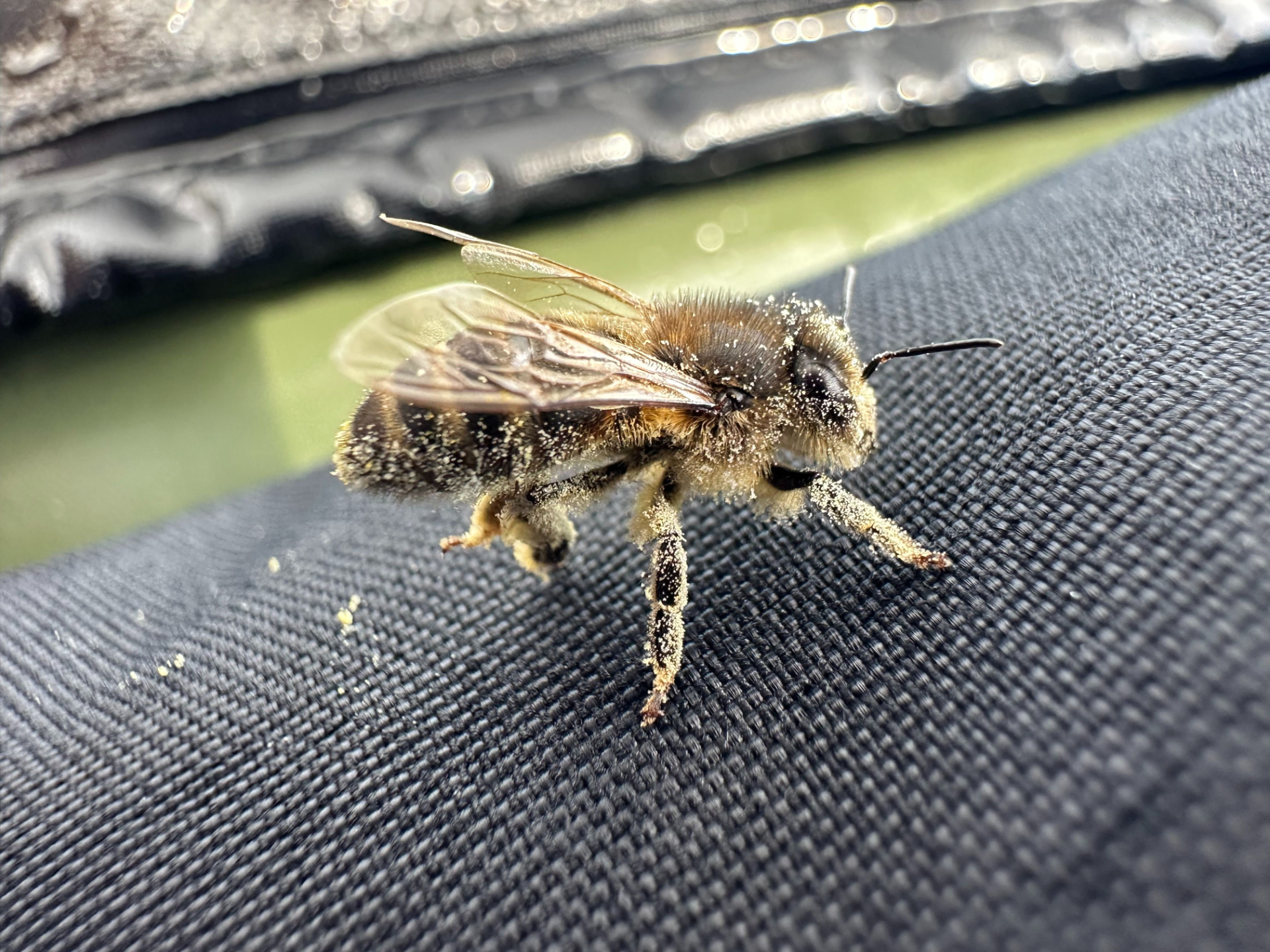
Making my decisions from a place of reactivity where it's like, um, oh, I don't like that. So I'm gonna run away from that and go over here. And just, just anything but that please. Right. And versus what would it be like to live life more like a honeybee? Um, I, I is, it reminded me of that because I was, when I was paddling around the island here on the sea, a bee came and landed on my leg in my pack craft.
Like, you know, I wasn't that close to, there were like 400 foot cliffs next to me and I'm like, where did this bee come from? But just hung out on my leg for a while. And, um, it was to remind me of this, but that, uh, what would it be like instead of running away from things to live life to where I'm like tuning into myself, opening my senses and my, just myself to what wants to happen here?
What do I desire? What do I actually, where do I want to go? What is drawing me forward rather than what? Chasing me that I'm trying [00:08:00] to get away from. So it's a completely different movement I've found of like the running away versus the reactive running away versus just opening myself and being like, kinda like a honeybee, I imagine sniffing around being like, Ooh, where's the best next?
Where's that? Oh, where's the bright flower? Right? And just being drawn to something and not allowing fear. It's basically not allowing fear to run my life, but instead allowing excitement to chart the course. So that's one example.
Sarah: Yeah, that's great.
Julia Sowaska: Yeah, it's been a while.
Sarah: is very cool. example. I mean, is there a way that that helps us ease our way into this conversation too, about
Julia Sowaska: Uh.
Sarah: we are doing with our or outdoor recreation adventure choices these days? I wonder if. Maybe a place to start that would be to talk about the early days of [00:09:00] recreation and what kind of things you were
Julia Sowaska: Yeah.
Sarah: and what kind of approach you were doing that from, and especially now in retrospect, maybe there's things that you're noticing about that.
Julia Sowaska: Right, right, right. Because yeah, a lot of the old motivation was me trying to, um, run away from feeling. Disconnected from people. It's like, let me, let me do the things that I think I'm supposed to do so that I can be connected to people. I wasn't necessarily doing them because I was so excited about them, but because everybody else was doing them.
And if I, I, I started dating this new guy, you know, like, you know, I'm thinking back to like, oh gosh, like almost 20 years ago when I started dating this new guy and like, I barely knew how to ski. And all of him and his friends, they were like practically expert skiers and snowboarders. And they were taking me places on the mountain that a beginner had no business going, absolutely none.
And it scared the crap outta me. And yet I was continuing to do it. And so I was, [00:10:00] um, rather than following my own inner knowing of where I wanted to go and what I wanted to do, I was allowing my actions instead to be based off of like, oh no, if I say no or if I don't go with them, I won't be connected anymore.
Um, yeah. And, you know, and, and also just the early days with pack crafting, like. Oh my gosh. Like, you know, just not knowing what I didn't know and getting into some really hairy situations. Two really big, scary swims right away in my pack grafting career, um, that went, that really impacted things for years to come.
But if I tie it back into the honeybee thing, the place that my nervous system is now would never have been, it never would've been possible for me to allow myself to chill out enough to feel into and have the, the groundedness and the regulation within myself to be calm enough to [00:11:00] follow my inner knowing and to not let myself be derailed by fear.
Because that's really what it is, is like, you know, like, who the heck. Packs up their whole life and, and moves to Europe for two years without a plan, basically. You know what I mean? Like, that's a, people do it, but it's a, it's a pretty big change and I never would've been able to do something like that, or a lot of the adventures that I do now, um, with the nervous system that I used to have.
So,
Sarah: Yeah. Yeah. 'cause there is that, like the scaffolding that we've built now over years of being engaged with this nervous system work for sure feels like a very different place to be from. And also to be like understanding the messages that are happening inside the body from, and it, it's like unfair to apply that to past versions of ourselves that just didn't have those skills on board.
Julia Sowaska: yeah.
Sarah: I mean, we just weren't, we weren't taught this stuff. And this fantasy of the, you know, in future [00:12:00] generations, these skills being something that people are taught
Julia Sowaska: Right.
Sarah: age. So that it's
Julia Sowaska: Oh my.
Sarah: of how we operate as a culture. And we like are sourcing just as all we're, we are just all learning early on to source the information that we need from the inside,
Julia Sowaska: Yeah.
Sarah: from that quiet listening place.
But yeah, in inside of what we, the culture we live in, right, right now. And the families, of us grew up when we just didn't, didn't have those skills. So,
Julia Sowaska: Yeah.
Sarah: yeah.
Julia Sowaska: How about you? What do you see, um, when you kind of look back in how your nervous system was impacting the way that you approached adventuring and all those things?
Sarah: Well, it's, it feels really similar to what you're describing with the sense of like, prioritizing, you're belonging and making choices around what other people are doing. I would say, [00:13:00] I for sure notice a lot of, um, in, in, when I, like, remember my younger version of myself, a lot of, sense of like, um, unworthiness or like needing to kind of prove that I was good enough and good enough in order to belong with the people that I wanted to be a part of their communities. So I would say a lot of. My approaches inside of like as, and honestly like, in some ways I wasn't that good because I was also brand new at Lyric learning the skills to survive in these situations. So it, it's, it's like not completely inaccurate to feel not good enough
Julia Sowaska: Right,
Sarah: when you're building a skillset,
Julia Sowaska: right.
Sarah: but there was a way that my system had that lack of [00:14:00] skills over coupled, over coupled is this nervous system term, you know, that we're using to mean like associated but in a somatic body way.
That means you can't just like, think about it differently. The body is like gonna map these two things together until they're able to uncouple. But the, um, that sense of like, my skills weren't good enough means I as a person am not good enough and thus am like. That it would like really quickly, like get mushed together and mean that, like send me into a big shame spiral even so,
Julia Sowaska: Right.
Sarah: it really tricky to be a learner
Julia Sowaska: Yeah.
Sarah: to
Julia Sowaska: Yeah.
Sarah: build skills in a way that was like true to where I was at.
So I'd either like try to front like I was better than I was or just not show up at all because it was too like tricky internally to, to not be good enough at the thing.
Julia Sowaska: Right. Like my connection to other people is under threat. If they see what my actual skill level [00:15:00] is, I have to be better. Right.
Sarah: I have to be good at this right away, which is like, that doesn't happen.
Julia Sowaska: No, that doesn't happen. Yeah. And you know, mine, mine was a little bit different in that it was more like, if I don't it, it almost felt like fomo, but not maybe in the traditional sense, but more like if I don't go participate with them, they will lose interest in me. Or you know, like if I opt out of this, I will get left behind.
And I didn't wanna be alone, like to my nervous system. Being alone and being left behind by the group felt like such a huge threat. And that's actually, now that I think about it, it's hitting me. But that's been a major theme in a lot of my adventures, which is, you know. And, and so funny. So like, uh, we always talk about, I always talk about, anyway with my clients about like how we create these self-fulfilling prophecies, right?
So here I am so afraid of getting left behind and somehow I'm managing to choose people who [00:16:00] actually do that, right? Like the people who, you know, take me up on some like double black diamond run when I, it's like my first season skiing and they all just go and I'm the last one left up there and I'm just like, oh my gosh, I'm gonna die.
Right? Or, you know, hiking with people who, where I'm, I often tend to be the slowest one and they're like half a mile ahead. There's no way I can communicate with them, let them know I need a break, let them know that I've got a blister and I need to stop and take my shoe off and like apply some mold.
Like whatever it is, and, you know, just constantly getting left behind. So it was really funny how my, that trigger for me was actually getting, it was actually happening. Um, and so what I ended up finding too then was that. Because I didn't want to be abandoned. I would a abandon myself by making choices that were not okay for me.
And literally led to my near death a couple of times. Like I can remember one time skiing in the back country where I, I almost crashed into a rock wall, and it [00:17:00] was a very extremely near miss. And I'm, I, I'm a little bit surprised that I'm here today. Um, but yeah, it's, it's really interesting how these things play out,
Sarah: Yeah. Yeah, and I, love In some ways it's like the genius of the nervous system and these things that the, the system in, its like body intelligence is often has fears around, are usually accurate on some level.
Julia Sowaska: right.
Sarah: usually some real truth inside there. And example there is like, I might get left, uh, behind and be on top of a mountain that's like very sketchy or out a hike where it'd be helpful to have some company. And mine is maybe like, um, I'm, people are gonna think that I'm not as good at this thing, that I'm actually legitimately learning. And some people might judge me for it, but not everyone necessarily. [00:18:00] So it feels like the, there's a nugget of truth inside of that. And then the, what happens on the body level is it just can like, take that nugget of truth and apply it to every situation, whether or not it's actually true in that moment or not.
Julia Sowaska: Right. And it's gonna help me pick people who are gonna help me play that out because it was, it's true that those people literally were valuing their own experience of the day, the adventure, whatever, over connection with me and making sure that everybody was okay. Um, and you know, nowadays I. Choose people.
The, I choose to prioritize my energy in relationships, like investing energy to build relationships with people who aren't gonna do that. You know, like there's, that's, that's a total full stop for me these days where I'm like, oh, you're more interested in getting to the top of the mountain than hanging back with me and going at my pace.
Like, cool, that lets me know who you are, which is totally fine. You get to be who you are. And I just know that that means that we're not gonna be the right fit [00:19:00] as adventure buddies,
Sarah: Yeah. Yeah. So that's the, that's like the. Other side of this journey, huh? That's where things have landed for you now. Can you talk about that process evolved? How did you get from that first place to where you're today?
Julia Sowaska: right. From nearly dying to mostly thriving. Um. I mean, well, I mean, a huge part of it is my, I was very blessed, um, to be able to afford the privilege of having se weekly SE therapy for seven years, um, because of really good health insurance through a place that I worked. Um, and so that was a huge part of it.
Um, and you know, it, it basically, gosh, the only it's being alone is terrible, especially when you don't have your own back. So I. [00:20:00] Didn't, as corny as this might sound, but like the self-love piece, like I didn't have that level of self-love and holding for myself. And because that wasn't developed when everybody else would abandon me too, to do whatever they were doing, it was extra horrible because literally there's nobody there to kind of, so pick up the emotional pieces of me and soothe me or reassure me or let me know, like, don't worry, Julia, you are lovable.
This has nothing to do with you. This has to do with everybody else. Um, but you know, somewhere along the lines, I have really learned how to apply this self-compassion and self-love of like this true just. Tenderness for myself of, of just loving myself and you know, when nobody else is there, I at least have my back.
So, so basically what that means is it no longer matters if everybody else leaves because I still have somebody, which is, even though it's just me and somehow it [00:21:00] feels so good like it, I know I'm just me and it's not an external person outside of me applying the reassurance, but the fact that I can soothe myself, that's a skill that I've learned through this whole process and has really made the difference in allowing me to say, you know what, Julia, it's okay not to hang out with those people because you can go find others and, and building those relationships over time.
Right. And, um, I've been a loner a lot of my life. Like, it's been extremely difficult for me to have relationships. So how funny that I'm a relationship coach. Um. And because it's been so difficult, I've invested so much energy and time trying to figure out how to do it and it's kind of led me to this point.
So, um, so yeah. And just all the nervous system work. I love that you called it a skill 'cause that's exactly what it is. These are skills that we did not learn as kids and our parents don't know them either. [00:22:00] Um, and so, but we can learn them in adulthood and come to a place where we feel okay within ourselves and we don't need someone outside of us to make it better.
For us, at least what I've learned is that I don't need someone outside of me. I can provide myself with what I need and I have other people who can provide that to me now as well. But because I can provide it to myself, I'm not desperate to get it from them, which means I'm willing to do anything I need to do to stay connected so that I can get the breadcrumbs that they're willing to throw my way.
Sarah: Yeah. Oh my gosh. I relate to that so much. Yeah, and I think like very similar again, with my process. I think the, the version of that that I would say I have been living is like. This sense of, yeah. When, when I was in that, like, I have to be good at something or I just completely suck as a person and like, [00:23:00] don't, like it can't be, I don't wanna be seen or like be around anyone and I even be around myself barely when I feel like I'm not good at something.
This is like, I mean this is kind of classic oldest daughter valedictorian, kind of like life path that I
Julia Sowaska: Right.
Sarah: off pretty early too. So, um, the, there, yeah. Similarly, this piece of like coming into relationship with myself inside of, like inherent self-worth and value even when I'm not like in doing something impressive or, or accomplishing something.
Julia Sowaska: Mm-hmm.
Sarah: is like, good enough has been super duper helpful and, and really like that, that sense of like, if I can be with myself when I'm learning or when I'm flailing or having a bad day or all of that, then, then I don't [00:24:00] necessarily need other people to, to show me that it's okay to be that because, 'cause I'm okay with that internally. The thing about that that I do kind of wanna reiterate though is that in order to get there, it actually was a relational process for me at least. Like the, sense of like internal sense of safety and I'm like, okay, here with myself, I, I kind of needed that reflected back through practitioners and well attuned friends and support networks and like the, as far as like the building, the nervous system skills and the physi physiology of the nervous system to be able to. that change and like be able to be okay with sourcing that safety in a different way rather than like, are other people gonna tell me I'm good enough or am I gonna hold, like, I'm gonna be the one who decides that it, it had to from both sides. Like for sure there's growth that I'm doing on the inside too, [00:25:00] but relational piece, like the co-regulation piece feels like, or it was at least for me, a pretty critical, critical part of that
Julia Sowaska: Yeah. Yeah, well,
Sarah: too?
Julia Sowaska: absolutely because well, where do we learn skills? We don't just learn skills in a vacuum typically. Like, yeah, maybe, maybe if I was on some deserted desert island, I would figure out how to flint nap just through trial and error. But so few, so few people learn skills that way. Like usually it's because we saw someone do something or we're watching YouTube videos, or we got lessons, or we had a mentor, or we went out with somebody who's much more experienced than us and was like, really?
You're gonna do a paddle stroke like that? Huh? Well, hopefully they don't say it that way, but, um, but, but yeah, it's, it's, it was, it's essential for me, it was essential to have it modeled. I just had. Absolutely zero. Um, I just had never experienced it before and, and when it was offered to me, it was so foreign that I would reject it.[00:26:00]
Like, it's like, I'm not letting empathy in here. No, no. Don't be nice to me. Don't offer me love. Don't offer me compassion. Don't tell me it's okay or that it's okay that I messed up or whatever it might be. Like, don't try to be connected to me. Like the thing that I wanted the most was actually what I was most scared of.
And that alone needed, like you were saying, like a skilled practitioner to help me work through that so that I could actually learn how to let in the good stuff, um, that I was so desperately needing and wanting. Um, yeah.
Sarah: Yeah, so. I guess maybe I wanna sh like take this conversation in, in a, I mean, to maybe to the next, next place that we wanna go with it because I, um, I really would love to hear you talk about how you're approaching risk these days if you're like making different choices around like what kind of activities you're saying [00:27:00] yes to or realizing that you want to do versus deciding that you want to do them because other people are doing them.
Yeah. How are you navigating all of that?
Julia Sowaska: Yeah, yeah. You know, um, I am. Oh gosh. And I know that Luke would say, you know, Luke, your, your partner Luke would say, uh, his, I recently read his definition of risk tolerance is different than how most people use it. I'm gonna use it the old way. Um, but, you know, my risk tolerance isn't very high. Like I don't have a high risk tolerance where I like to, um, put myself in really, really risky situations.
Typically, I can do that if I need to, but I don't want to. And I found that I used to put myself in a lot of ris really risky situations and, um, that I might even seek them out. And nowadays I am finding that I just don't have the appetite for it. That when I'm faced with one of those [00:28:00] situations, instead of like.
Kind of buckling down and like grit my teeth and just getting through it, that I'm just like, no, I do not want to do that. And um, the toll that it takes on me and my nervous system and my ability to kind of rebound after some sort of scary event, even if nothing happened, um, you know, is really, really impacted.
And I just found that as I was doing the work over the years, like it was like, I, I just, I just didn't wanna do it anymore. I was just like, no. Like this is, this is not for me. Um, and I know that you've experienced sort of a similar trajectory if, if I'm correct, there.
Sarah: I, um, my, I mean, I feel like I'm still in this exploration, honestly. It's like, uh, we're, we're recording this at a, at a point in time along the journey, and it feels like things are continuing to evolve. I don't feel like, I certainly don't feel like I'm like done on the nervous system level. I don't know if there is such a [00:29:00] thing. Um, the, yeah, as I started to come into my body in a deeper way and have, build these skills of like actually reading what's happening inside and understanding what those signals mean and feeling the actual results of doing something that was. Scary and like actually feeling that rather than being like, I think before my body had a pretty good disassociation strategy or a freeze response that would help keep those sensations at bay. And so I wasn't necessarily consciously aware of them until I started diving into this work. And then it's like, as I started to feel them, it was like, well damn, that's actually really uncomfortable and like you said, takes a long time to recover from. So I did have to, I at least my process did involve like stepping way back [00:30:00] for, for quite a while.
You know, I was like thinking, it was like, I'm like, I'm gonna do a softer season for this summer, like in my innocent self thinking like if I just back off for a summer, I'll be able to get right back to it, I'm sure. And instead that's been more like. Five or so years, I suppose, of like backing off pretty intentionally out of anything that was especially like things that were scary, like inducing fear responses.
Julia Sowaska: Yeah.
Sarah: which would then for me kind of turn into a, a freeze or response or, um, kickoff some activation that didn't feel very good in my body.
Julia Sowaska: Yeah. Yeah.
Sarah: yeah, so like you said, there was like identity ties with that and all this. It's, I mean, I had to deal with all the self-worth stuff too. I do these days feel like there is a new phase that's emerging that is, I'm really excited and curious about because it feels like something shifted in my nervous system in the [00:31:00] last year that where, where it feels again available to engage with some of the more physically challenging and activating experiences.
And I'm noticing less of a sticky nervous system. Experience with those. Like I can move in and out of the activation response
Julia Sowaska: Yeah.
Sarah: and I, and I find myself curious about what that might open up athletically. Again, like if I can maybe take on some of the more, least physically challenging stuff. I don't know if I wanna get into like scary stuff necessarily, but, um, getting back into physical challenge feels more available and, and that feels like an exciting thing to be moving back toward.
Julia Sowaska: Yeah, absolutely. I was, I was just gonna say, circling back a little bit, that like when the fear of disconnection isn't driving me, it sounds like you as well, that like we have these scary things that are in front of us to do, but our fear of being [00:32:00] disconnected from our people by not doing them for some reason drives us and is almost worse than the, uh, thing that we're fearing.
At least what I found was that I would just go do that instead. 'cause it's like, oh, I don't want this other scary thing to happen. It would be way worse if my group abandoned me than if I forced myself to do this rapid versus portaging it. Um, and so yes, it's been now that I don't have fear of disconnection, motivating my every action.
Instead, I get to be like, oh, I'm gonna do what's best for me. And I actually, I don't care what these people think about what I'm going to decide to do. And so it, it has opened up much more, many more options, um, for me within, within my adventure and, and really backing off. And, you know, it's, I think it's, gosh, it's also been several years for me and, um, and so I haven't been putting myself in those scary situations, kinda like you said.
But recently, I, I had the opportunity with a, um, really scary personal situation [00:33:00] that I think would throw anyone for a serious loop. And in the past I would've completely spiraled from this thing that happened and all of the fallout from it and everything else. But the, the really scary thing happened and I had a really crappy 24 hours, I think also because, um, a night of no sleep was involved with the incident.
Um, but then I bounced right back after I got the sleep. I was just like. I kind of felt weird. I'm like, is something wrong with me? Like, am I dissociating? Um, is, is this my old management strategy? But like, I was just really okay with the thing that had happened and I didn't really have any fallout and I was able to bounce back and I didn't really have this traumatic imprint that very easily could have occurred.
And, um, it was, it was just really fun to see and, and when we have that ability to just meet a situation is, it feels so incredible. Like, I can remember one time that, um, we had been, um, we were going, we did a [00:34:00] self-supported pack craft trip down the middle fork of the salmon. And there were four of us going, and none of us had ever done the river.
And it was like September, uh, late September, if I'm remembering correctly. And, um, you know, we'd, we'd put in and, you know, there's some pretty big rapids on day one and. Um, I, I tend to be the kind of paddler that my skill level is far better than what my fear would have me believe. So I'm a timid paddler, even though I have every right to be doing the rapid that I put myself in front of.
Like, I know that I've got the skills to do it and, but the fear part of me is just like, no, don't do it. Right. Um, and everybody else in my group is either more skilled than me or braver than I am with Whitewater and just like, whatever, let's we call them the meat hookers, they're like, they're like, I'll go Huck my meat for you.
Like, let me let, because it's like, send them and see what happens, right? Um, and none of them wanted to go and none of them [00:35:00] wanted to do it. This was back when Velvet Falls was still, um, before it changed a year or two ago. Um, and so none of them wanted to do it, and I'm, I usually just like, people were like, oh, who wants to go first?
And someone's usually like, I'll do it. And nobody, everyone was like, Nope, nope, nope. And I was like, oh, I'm like. I can do it, I feel totally fine leading, and I was able to lead us through some of the bigger rapids, you know, just boat scouting. Um, and I was completely okay with it. And it was just really incredible.
I, I was very surprised at myself and my ability to be able to step into that role because it's something that wouldn't have been feasible for me even a couple of years or a couple of months before that. And the other thing that I found too is that whatever it is that I'm about to go do is very much.
Impacted by the level of stress that is present in my life at the current moment. Like that trip, I remember everything was going [00:36:00] pretty well in my personal life. I can remember another trip where things with my, um, now ex-partner were falling apart. Things at work were going terribly. Things with the group of people that we were on the river with weren't, the group dynamics weren't so good.
Just a lot of different pieces weren't good and there's a lot of stress and like, I, I literally on that river trip was just like, oh, I don't know what it's like to have a breakdown, a mental breakdown, but I feel like I'm about to have one. You know? And, and that group refused to scout any rapids. It was the scariest river trip I've ever been on.
It was on the Rogue River, um, in the lower 48 and it's. I feel like those rapids are huge. But anyway, um, so I kind of compare those two things. They, they happen during kind of a similar period of time in my boating life. And to see myself on that river versus the other one, um, knowing that the stress was a huge factor in that.
So it's, it's everything's, we're all just walking nervous system, Sarah.
Sarah: I know, and I wanna reiterate [00:37:00] that point 'cause it's so good that the, that like the, our nervous systems are so influenced by everything else that we're experiencing that the and, and then the state that your nervous system is in, influences your whole perception of what you're ex, what you're doing.
Whether it's a rapid or a ski day or you know, whatever, or your email. And that just shifts so much based on the state that you're in, which is a to all of the other things going on in your life. 'cause I feel like I hear people, I'm like imagining people listening, thinking about their own experiences and being like. Why am I like this? You know? Or like, why can't I know I can do this ski? But like for some reason I am like freezing up or getting really shut down, even though last week I did it and it was no problem. Is there? [00:38:00] Yeah. What, what would you say to someone who is living that?
Julia Sowaska: Yeah, I mean definitely, especially if it's something they've recently done. It's just like, you know, for women it's like, I know that you talk about this in your program. It's like, where are you on your cycle? Right? Like, and what's changed in that intervening week? Did you have a really hard week at work?
Did you get terrible, tragic news? Did someone in your family die? Did you lose your job? Did um, you have a big fight with your partner or your friend or whoever you're out there with? Are you with people who you're not super familiar with and you don't know if they really have your back? Um, any of those variables could significantly change your experience of the same thing.
Like I know that there's a run, um, you know, back around my hometown of Bozeman, um, in Montana where if there's three of us and we're all at least equal, uh, skill level, I'm fine with the run. If it's two of us. I get so anxious about it and now I [00:39:00] just know, like I've had experiences where I don't have anxiety doing a run.
And then there's the times that I do, and I know that when I have anxiety, that tells me that's like my little indicator light, like my little flash morning light being like, Hey, something isn't quite right here. Like something needs your attention. And then I get to ask myself when I have those experiences.
So if I was that person on being like, oh, I just did this a week ago. Why am I having this experience? I would ask myself, well what has changed? Like, do I not feel good about the people that I'm with? Has it been a really rough week and I haven't slept? Like what are all the different variables that could be impacting how you feel about what's going on?
What about you? Was there anything you would add to that?
Sarah: It just, it just feels like as you build this sense of like, trust in what's happening in the body and like the information that you're getting from the nervous system, I'm, I'm like making this shift from like, what's wrong with me? Or like, why am I like this? To like, what else is [00:40:00] happening here? That this is information that it's like reflecting back to me, which is like the same thing you said, but just in different language.
But it's like, what are these, what is this feeling that's happening in my body in indicator light? that I might need to tend to. And then sometimes we can tend to what's happening and experience a state shift, like getting some food maybe, or like, you know, reminding your body that you are with people that you, um, you know, you have a good team or like, like connecting with resources or grounding your system or some things like that.
But then sometimes we just have like lower capacity days for other bigger reasons that aren't as shiftable by just some like strategies on the spot. And we might need to adjust what we're expecting of ourselves in those days rather than trying to get our body to change, to meet the that we had for what we wanted to [00:41:00] do.
Julia Sowaska: Yeah, and that's where feeling safety in the group is so important is if you're not with a group where you feel comfortable saying, Hey, this isn't work for working for me. I want to do something different today, or, I'm gonna turn back, or Let's all turn back, or, I'm not gonna do whatever. Either A, you're with the wrong group of people, or B, you haven't done the work within yourself around some old trigger or wound that disallows you from speaking up because you're too scared that it will.
Create disconnection and you don't want that either. And so that to me is, um, is a, a big indicator of that. I wanted to reiterate something that you had said, um, about changing variables. It, I might have lost it though. It's okay.
Sarah: Yeah, maybe it'll come back around.
Julia Sowaska: Yeah, it might
Sarah: Yeah, I was thinking too about [00:42:00] your middle fork salmon trip and that example of how you stepped in to lead the rapid from a place of like checking in on with yourself and being like, oh, I actually can do this today. Which is such a different experience than being like, you know, what we're talking about as far as previous iterations of self being like, oh, I, I gotta do this so I can show everyone
Julia Sowaska: correct.
Sarah: or, or like from, from that fearful place of like, I, I need to do this in order to belong, versus it's the same action.
You know, it could have led the rapid in either of those ways, but it's so different when it's coming from that embodied place of like, I know I am okay here either with either choice and right now I'm actually noticing I have capacity to lead this thing.
Julia Sowaska: Which was really very different. And you know, if I didn't have the capacity, you know, you were, you were [00:43:00] talking earlier too about making those decisions and like when things change and you have different expectations of yourself, it's not about, like you were saying, what's wrong with me? It's, and judging yourself, it's also just about accepting what is and where you are.
And rather than being like, what's wrong with me, you can ask a very different question, which makes you feel less crappy too, which is like, what conditions do I need to be able to do something like this? And is that something that I really want to do? Rather than just, you know, like, like sometimes, sometimes it doesn't even matter.
Like why? Like why don't I wanna go run that rapid with those people? Why don't I wanna go on that river trip with those people? Like I should, I should be okay with that. I should be okay with just doing whatever with anybody. And it's like, well. Actually, like it's okay for you to just have preferences and to not want to do something and like for whatever the reason is you are the way that you are.
And sometimes that's just okay. So I think that that's been another big, uh, big piece of the learning [00:44:00] curve for me.
Sarah: Such good framing. I really love that. Yeah. Yeah. And the sense, I mean, it's so human to wanna know why, to be like, why, why, what's happening? Like what, what, what's changed? And I know we've, as we've deepened into this body-based work, have, one of the big learnings for me has been that like, sometimes, you know why, and sometimes we just don't. And even when we don't, we can trust that the body has something, it's responding to something that it needs. Attention with or support with and, and, um, trust that even if we don't necessarily know why it's happening, we can still work with what's happening and support it.
Julia Sowaska: Yeah, exactly. You get to be a unique individual that has been born to this planet that the universe has never seen before and will never see again. And you're gonna do things a little differently and you're gonna like certain things and you're not gonna like certain things. And all of that is okay. And we, we get to just [00:45:00] like discover who we are and be who we are.
And you know, it's kind of like a teacher that I've been following. Following recently, you know, it was like talking about all the organs in the body and how like if the heart was trying to be the liver, like we would die. Or if the stomach was like, oh, why can't I be more like the brain? We would also die.
You know, like none of the organs are in there being like, oh, I wish I was like the heart. You know? It's like, no, it's like the liver's, like, I've got my job. I am who I am. I've got certain qualities and characteristics that uniquely make me able to fulfill a certain role and just be itself. And it's, it's really important.
So the n the world needs us as we are. Like, we're all here for a reason and we're all, you know, whether you believe in evolution or some sort of, um, spiritual belief, like either the universe put us here or evolution did to fill a very specific niche. And, um, and it's just so fun to discover what that is and to be more true to myself.
It's made adventure, more fun. Like I can be [00:46:00] less anxious and fearful now because I have a no like. Because I can say no, I can trust myself to go anywhere and do anything because if I am presented with something that is not okay with me, um, I know that I can say no and, and be okay with that.
Sarah: Yeah, it really is that access to the no that allows you to actually say yes.
Julia Sowaska: Right.
Sarah: really say yes from a place that is truly a consensual one. 'cause if you can't say, can't actually say no, then the yes is sort of a forced one. So yeah, I think
Julia Sowaska: There's a saying, there's a saying I heard once, which is you can't trust somebody's Yes. If they don't have a no.
Sarah: Yeah.
Julia Sowaska: And so, so much of our lives, at least in my life and, and what I see with a lot of clients in my work is that because we do not have a no, because I cannot say, no, you shouldn't trust any of my yeses.
That means that if you ask me, Hey Julia, [00:47:00] can I borrow your this? I'm gonna say yes. Hey Julia. Um, you know, can I like. Borrow this other thing, and then, Hey, can you come help me with this? And then tomorrow you're like, can you come help me with this? And I'm just like, yes, yes, yes, yes, yes. And the whole time I'm just like, Ugh, Sarah again.
She's like asking me for something else again, you know? And it's because I can't say no, that's really my problem. A and it breeds resentment. But like, if I am that person who cannot say no, I'm not gonna be able to trust anybody else's. Yes either. And it's gonna make me feel really insecure. It has made me feel insecure in the past because I don't trust other people's yeses, because I don't trust them to say no, because I also can't say no.
So it's like, you know, a projection, but, um. You know, it's the same thing with my, with my people these days. Like the people who I invite to be a part of my life, if they don't have a no, I don't want them there because it means I can't trust them. It means that if I'm like, Hey, I'm having a really hard time.
Can you spend 30 minutes on the phone with me right now? And they say Yes, but they're gonna resent me for it later. [00:48:00] Like, you know, one time I had someone like, Hey, can you take me to the airport? And they said yes, but they were really resentful about it and it felt terrible. And I'm like, you know, that is just not something that I want to have in my life.
I want people around me who I can trust, which means that they need to be able to tell me no. And that's so important in Adventure Partners. Like I do not want an adventure partner who, um, is having a hard time and can't perform, but they won't say that and tell me that all of a sudden puts the whole group at risk.
And you know, we were talking about risk management a little bit earlier, like people who aren't, um, don't have a no and have some other nervous system stuff going on. They create more risk in in our adventures. And I bet you've seen a lot of that sort of thing too.
Sarah: I know this is like, okay, there's a couple things I wanna say here. 'cause
Julia Sowaska: Yeah.
Sarah: been a personal practice for me lately as, um, I, what I'm noticing in this, um, journey of like trying to [00:49:00] come become more embodied with that. No, and I mean honestly, there's, there's like so many layers in this.
I like inside of. Avalanche safety classes. There's so much about the heuristics and about like the way that social, they don't use the term, but social nervous system often blends us into following a group rather than saying something different. But one of the personal practices I've been in these days, 'cause I was noticing that when I would to say no, I would feel like I needed to justify it. I'd be like, this is why. Let me tell you all my reasons. Um, and honestly, in some ways I, I look back and I'm like, I think this is why I, like created this whole business. 'cause it's like I wanted people to believe that like when my cycle is. In luteal, I have less energy and I just want the whole culture to embrace that so that if I need to opt out, it can be okay. It's like, um, this, yeah, this, this, uh, desire in me to be, um, [00:50:00] validated when I say no by, by explaining it. So anyways, I've been trying to break that habit and, and trying to embrace just the, like, I don't know, I just feel weird. It's like, I don't know, I, I, not feeling it today. Not, not needing to have a, like a super concrete, like I. This is what I'm seeing. I mean, and sometimes in risk management situations it can be helpful to be like, I see that this Rapid has a log in it, so I'm not going to run it. You know, to have like the very cognitive concrete answers can be really nice when we have access to them. But other times, other times we're getting more subtle or nos that come in other forms.
And so I have, that's something I'm practicing, but then I'd also love to like talk a little bit about where, like how, how to work with situations or even body responses that are less clear and that feel more like maybes or that there's like a, there is a, a [00:51:00] partial no and a and a partial. Yes. Like that.
That was happening for me a lot when I was, and I mean honestly, I, I dunno why I'm using past tense. 'cause it's still part of what I navigate, you know, is like sometimes there's a little fear and then also there's also a desire to do the thing and we're navigating. More of like an in-between place.
Julia Sowaska: Mm-hmm. Right.
Sarah: have any, do you work with that at all, either with clients or with yourself?
Julia Sowaska: Yeah, I've, I've totally noticed that within myself. Um, and it. It shows up and I can feel myself kind of being pulled in two different directions, like, you know, competing impulses as we would call it, in the SE world. And, you know, I'll usually check in with the, the part of me that doesn't wanna do it, and I'll try to get clear on, on what it wants and needs or doesn't want and doesn't need what it does or doesn't have capacity for.
Like, get clear on if it [00:52:00] needs reassurance or if it needs to not do the thing. And, um, you know, I, I think, I think for me it's, it's become a little bit easier. I, I actually find myself having those experiences less often because I just have more clarity within myself in general. So I just know more often, like, and, and I have my spiritual practices too, so I, I just am so.
You know, adept at finding my center that I know when I'm getting pulled off of it. And I know that when I'm getting pulled off of my center, which is what maybe feels like to me, that I know I need to come back to my center and, you know, do, do a grounding exercise like these things that I do. And then from there things will usually become a bit more clear, like, oh my, maybe is because I don't want this person to be mad at me if I say no, or this maybe is because if it's, you know, blowing 40 miles per [00:53:00] hour wind winds tomorrow, I'm not gonna do this.
Um, or it might be that, um. I'm a maybe because this person usually brings this other person with us who always has a hangover, and then the whole experience of the group is compromised for the whole day. And if that person is coming, I don't want to go on this trip, so let me get some clarity on, you know, who's gonna come tomorrow or make a request like, Hey, it's you and me tomorrow.
If you wanna bring someone else, that's fine, but I'm not going to come. And you know, I think part of that is like, and how I handle that and, and being out there and is with boundaries of like, being able to say like, I'm not gonna do that. And, and you know, you had talked a little bit about, um, how you, uh, oh, I might have lost it.
You had been talking about, well that's okay. It's getting late here. So I think my brain must be [00:54:00] getting fuzzy.
Sarah: Yeah, that's fair. Yeah. Was it just, just before when I was talking about like wanting to do, wanting, like having some fear and not, and not wanting to do it. And then, um, also I.
Julia Sowaska: Yeah. Yes. And you were talking about saying no, or you were talking about maybe's, um, oh, and you were talking about explaining yourself. Okay. All right. We can, we can do it from here. Um, so you were talking about justifying yourself. And what I've found with I've, I've had the same problem for so long, like almost my whole life, right.
Until, until more recently, where I also was working on that. And I find that when we justify ourselves and we give someone an excuse or a reason that. They then now have something to argue with us about and they can try to convince us. And usually I find that when I'm trying to justify myself, [00:55:00] I'm trying to get the group to agree with me so that I don't feel like I have to have a boundary that everyone all of a sudden will be like, oh my gosh, Julia, you're right.
Let's just go ahead and go do that. Rather than doing the much harder thing, which is for me to say, this doesn't work for me. I'm not available for this. I'm out or I'm done. Or Can we please do it this way? Oh my gosh. Those are like the hardest words in the English language, in my opinion, is actually asking for a need to be met, which is, Hey, this doesn't work for me.
Can we please do it this way? Because that's then opening up to like them telling me no, which is, could also feel like rejection or hurtful. Right? And so, um, so yeah, it's, there's so many different variables.
Sarah: Yeah. Okay. I'm watching our time where like, we've been going for close to an hour, so I know we probably wanna wrap up here soon, but I, one thing I really have been wanting to ask you inside of this conversation is if you like the people that come to [00:56:00] you for, like, post adventure crisis, like work maybe in your personal life too.
Like would, as, is there like a trajectory where that we're on as we pay more attention that we just do less and less extreme stuff or take like less and less risky things? Or is there. the trajectory more like, does it, are there more pathways than this? Because I feel like sometimes I get afraid that people are going to like, perceive this work as like, it's just gonna make them like slow down and do less.
Julia Sowaska: Yeah.
Sarah: that's, that might be the case for some people, but I, I wonder if
Julia Sowaska: Yeah.
Sarah: it always is.
Julia Sowaska: Right. I think it depends on what someone's risk tolerance level is. Their ability to tolerate discomfort or their ability to tolerate activation, right? Because when we go to [00:57:00] do some riskier or more extreme thing, there's going to be a lot, the body's going to respond to it as it should. You're putting yourself in a situation where you might die.
Of course the body is going to respond to that. And if someone has the capacity to hold and contain that, it's not gonna be a problem for them. If someone doesn't have the capacity to hold that, or if they don't like that feeling, then they're probably gonna start making different choices to go and do something, something else, and something different, and something that feels more true to them that is actually enjoyable.
And you know, I think that, I think that for the people who are afraid that it might change them is like, yeah, it might. And. You know, do you really wanna keep doing things that are harming yourself? That, you know, it's like, oh, I'm actually not enjoying this. But I just can't really necessarily feel that.
And over time that stuff actually accumulates and then you don't wanna do it even more is, is what I've seen. And you know, sometimes people do slow down and [00:58:00] sometimes, sometimes they don't. And sometimes people with this work, they develop the capacity to hold more of that kind of charge, so they're actually able to continue keeping doing it.
Um, and then some people find like, oh, I was actually doing this just because. I didn't know how to regulate my nervous system or I couldn't feel, or like I can't feel anything. The only time I can feel something is when I'm doing something extreme and then they find like, oh, I'm more regulated. I can feel more, I'm less dissociated from my body.
I don't need to do the extreme things to feel good. I can feel good by holding a warm cup of tea in my hands. And that doesn't mean you don't go out in the mountains anymore, but like, you know, just doing a Class two river feels just as good as doing the other more extreme stuff. How would you answer that question?
Sarah: yeah, yeah. I agree. I think. does some sometimes. Yeah. Like when, when there's like a bunch of management strategies that are needing to come on board to manage the [00:59:00] intensity of these experiences. Like then when, when we do start to actually come into relationship with those strategies and their impacts on the body, there often is this period of needing to kind of step back and recalibrate and like Yeah.
And, and sometimes it can be kind of intense to, see all of that and, and notice the ways it's impacting the body. And then, oh my gosh, there's all the, like you had named earlier, the identity markers and community and all the things that, that can come up around that. but I also like one of the. Um, SS that I sometimes have sessions with is all is a mountain biker and a skier.
And she's so embodied and so present she talks about being the person who is the least injured of anyone she recreates with. 'cause she's just like so attuned with what's happening and with her body that [01:00:00] she can take super good care of herself and do hard things, but in a way that is very aligned with what her body's capacity is in the moment.
And be really responsive with what's happening in the world and also inside herself. And to me that feels like a superpower, that, that's like one of the models that I hold of like, that's like a very cool place to recreate from. That's just like really deep alignment with yourself. um, I really, mean, I think all of our paths are different and sometimes we.
L our bodies want some space from intensity. And maybe that's the, that's the path that your body wants to be on for rest of your life. And sometimes it's a season and a phase wherein things are like recalibrating and then maybe something else will come around. And I know I've certainly, like, I think about my bee sting, anaphylaxis, backcountry story that I've told on this podcast before and told, shared with you and that [01:01:00] that like really close call situation really well supported felt like it turned more into what it, like psychologists call post-traumatic growth rather than post-traumatic stress.
Meaning like, it landed as a really like a reinforcer for me of like, I can, like I know how to handle this stuff
Julia Sowaska: Yeah.
Sarah: it's very unexpected and very remote.
Julia Sowaska: Yeah.
Sarah: navigate it. And that's felt like, that has like fortified me for doing. More remote things with less fear, so
Julia Sowaska: Yeah, I think that, I think that, I think that no matter what happens when you do this work and become more embodied, it's going to help you become more of yourself and get more, yeah, get more in tune with your, in your natural capacity. So if you're afraid that it's gonna take you in a bad direction or that you think you might not wanna go in, really what you're saying is, I'm afraid to be myself fully.
Like, you know, if you're [01:02:00] artificially holding yourself up or artificially making yourself continue to do these activities that actually aren't a true fit for yourself and your spirit and your heart and everything else, like, what are you doing anyway? Like, you're setting yourself up for harm in some way.
And, you know, and, and, and yeah, doing this work just opens up so many doors and really can help us be better adventurers. And, um, it's, I mean, it's been absolutely life changing for me. Like it's, it's been such an incredible journey and I'm so grateful.
Sarah: That's really cool way to frame that. I love it. What a nice thing to end on. It'll helps you make, make you more yourself. And sometimes that brings us toward the mountains and adventure and sometimes it brings us in other directions, but it doesn't matter 'cause we just get to be more ourselves.
Julia Sowaska: and we're gonna enjoy that. Mm-hmm.
Sarah: Yeah. Not that it won't be uncomfortable sometimes in the shedding phases, which is part of it, but the, the freedom that that [01:03:00] comes feels
Julia Sowaska: it feels really good. I can speak from experience on the other side.
Sarah: Yeah. Yeah. Oh, Julia, this is so good. I feel like we could talk forever, but um, for this conversation, let's make a date to circle back another time.
Julia Sowaska: Awesome.
Sarah: is there anything else you want people to know about what you're up to these days?
Or
Julia Sowaska: Yeah. Thanks.
Sarah: find you anywhere?
Julia Sowaska: Yeah, uh, they can find me through my website. Um, I am working remotely, so I am still seeing clients online. Um, and I've got, uh, if you go to my homepage, you know, there's a, you can sign up for my newsletter, which is really just my current travel blog where I discuss kind of things that we talked about today, like both sort of the, the spiritual and heart sided side of things and adventure and, you know, just kinda life things.
But that's kind of the angle that I take. And my website is currently different from my name because I changed my name so recently. So my website, um, do you have [01:04:00] show notes and whatnot? You can
Sarah: it. Yeah, we can link
Julia Sowaska: julia yoker
Sarah: Uhhuh.
Julia Sowaska: So, um, you can find me there if you want to learn more about me or my work, or feel free to get in touch and like be like, oh my gosh, we can always continue the conversation over email.
So
Sarah: Yeah. Nice. What a pleasure.
Julia Sowaska: yeah, thanks so much for having me.
Sarah: you are. Yeah. I hope you get some good rest. It's been really fun to out about this stuff with you. Thanks for being my friend.
Julia Sowaska: Yeah, it's been amazing. Thank you too, and it's been such an honor and a pleasure