episode 37:
Practice: A Slow Walk

Or Listen On:


Show Notes
In this episode, I invite you on a slow walk practice — an exploration of pace, nervous system regulation, and what becomes available when we intentionally downshift.
We begin with a story from a recent neighborhood walk, where someone commented on how slowly I was moving — and how differently that landed in my body than it might have in the past. From there, we explore the idea that slowness isn’t “better” than speed, but that many of us live in cultures and nervous systems that are deeply conditioned toward urgency and fast pacing.
Together, we experiment with slowing down physically and noticing what shifts: awareness, sensation, breath, attention, pleasure, discomfort, and connection to the environment around us. Along the way, I offer reflections on nervous system range, inner critic healing, and the importance of finding your own pace rather than performing someone else’s.
This episode is an invitation to get curious about rhythm, pressure, and what your body might want if there was nowhere to be and nothing to achieve.
Timestamps
00:00 — Introduction + invitation to slow walk
01:00 — The “Art of the Mother Duck” class announcement
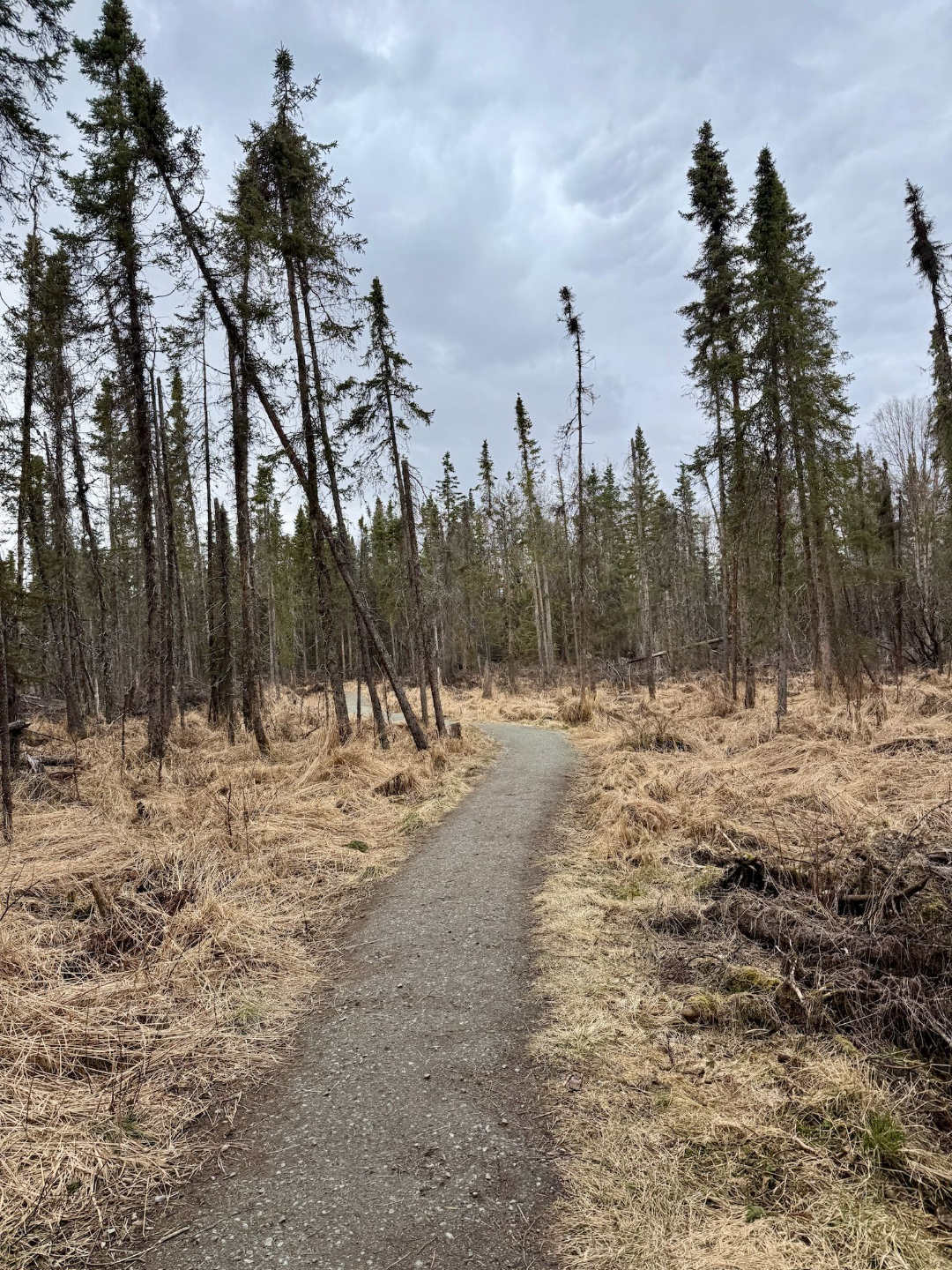
04:30 — Early spring in Alaska + the story behind this episode
05:20 — “You’re walking so slow”
06:30 — Slowness, nervous system range, and cultural pacing
07:30 — Inner critic healing + trusting your own pace
08:50 — Beginning the slow walk practice
10:00 — Settling into a slower rhythm
11:00 — Feeling feet + contact with the ground
12:30 — Letting your feet choose the pace
13:00 — Slowness is not morally superior
14:00 — Activation, exercise, and learning to slow down
15:00 — “Your pace is sacred”
16:00 — Bringing awareness to ankles, knees, and hips
18:00 — Expanding attention into the environment
19:00 — Sights, sounds, smells, and air on the skin
20:30 — Checking in with your current pace
21:30 — Releasing pressure + achievement
23:00 — Noticing what happens in the body
23:30 — Discomfort with slowness + nervous system learning
25:00 — What becomes available at a slower pace?
26:30 — Closing reflections
Resources:
Learn more about and sign up for The Art of the Mother Duck here!
Submit your questions for the Q&A [here]
Photos and links from this episode:
www.mindandmountain.co/podcast
Transcript:
Sarah 0:15
Hello, co regulation conversations. Great to be here with you today. I am out on a walk, and I wonder if you might want to join me. My idea for today is to do a slow walk practice together. And before we get into that, I have an announcement, and I want to tell you a little story about how this idea came around. And yeah, then we'll do some slow walking, if that's sounding good for you. Okay, so first my announcement, this is about the class that I'm teaching with my husband, Luke, on Monday, it's coming right up. If you're listening to this in real time, this is a class that we've been wanting to put together for a long time. We are bringing together Luke's outdoor rec and instruction world with my nervous system, somatic world, and teaching what we're calling the art of the Mother Duck, which is a term that comes from Luke's pack rafting classes, where they group up and with their boats, and the person who has the most experience is the mother duck of the group, and the people who are learning follow the mother duck down the river. The idea there is that we all have these opportunities to be leaders mother ducks in our lives, and especially in our outdoor recreation, and one of the ways to do that well is To know how to read and understand and support the people. The little baby ducks your your people's nervous system as well. So, yeah, there's a there's a whole page with information about it. If this is something that you're interested in, I think of it as a skill set that we could all use, and we're doing this class that's like kind of outdoor rec specific, which is, I think going to be pretty neat, because Luke has been we've been using these skills together in our relationship and in our recreation together, and then he's also been taking them and applying them in his classes. When he's teaching river safety or avalanche safety, all that stuff. And so he's been using them in these like real life teaching applications, and has found them to be super helpful. So yeah, he's a really good outdoor rec instructor and an interesting person to share these ideas with, because he doesn't really come from this world, the nervous system, somatic world, but he's benefited a lot from what I bring to it. And so yeah, I think collaboratively, it'll be pretty neat. And love to invite you to join us if that's something that interests you, hopefully this is, like a new offer that it's been really well received already. We've just been doing like, a pretty light promotion cycle on it, and so hopefully we'll be able to do it regularly, maybe maybe annually in the spring, potentially also in the fall, if there's enough interest. So okay, so that's my announcement, and then let me tell you about how this idea for doing a slow walk practice came together. So it is just very early spring here in south central Alaska, the trails are starting to dry out. This week was the first time I was able to go out on walks, on trails in my tennis shoes. Feels like a landmark spring moment, also first mesquite. Dough that I saw first mosquito bite all of these summer things are starting to happen. And so I was out on a neighborhood walk on the trails close to my house this week, and bumped into an acquaintance. And this person was like, Oh my gosh, Sarah, I didn't recognize you. You're walking so slow. Yeah, that's what she said. It was pretty interesting, surprising kind of statement to receive, and I had two things that I noticed about that, one being that I really like walking slow, and it's pretty neat to be at a place Where I can appreciate that, and something that my nervous system really likes, and I can, like, feel the reverberation through my through my whole body when I'm in that, like, slower rhythm in my body, I'm also, I mean, I don't always walk slow. I am also like, I also like walking fast sometimes, and am even like feeling great about doing some faster hikes these days, which is another topic. So it's not that like, I think slow is like, the only way to go, but the benefit in our systems for having the range available and being able to move into a slower pace, sometimes is has A ripple effect, especially for those of us who like, are aware we like operate at a fast pace. Culturally, many of us operate at a really fast pace. And so what we the range we might need practice with is to develop the access to the slower rhythm. Yeah, yeah, can be really, really nice. Okay. And then the other thing I noticed in this experience was that because I am, like, so centered in my, like, trust of my pace these days, and also have had, like, some pretty big breakthroughs recently around inner critic stuff and like feeling good safety on the inside, rather than like sourcing it through like external stuff. So for many reasons, that feedback I could totally see, like past Sarah being really offended by that, or embarrassed, or like feeling shame, because I don't know, like walking at a pace that surprised this person, and there was just none of that there, which is a miracle, really amazing, that so much has shifted in me to be able to like, See that comment more as like a reflection on this other person and their expectations, and maybe even you know what, what pace they're used to operating at and not as a something I need to internalize or even interpret as a judgment. Who knows? You know, maybe it was just very neutral feedback. I So with all of that said, I wonder about doing some slow walking together, moving toward a little practice. And maybe start this by just noticing what rhythm you find yourself in right now. And yeah, we'll just like offer the idea about what it might feel like to downshift a notch. I And as that happens, if it happens, see what it's like to settle into this. Slightly slower pace. Wonder if there's anything you notice about that that is pleasurable, that feels good might just feel different because of often how habitual our pacing is. I wonder if there's a level of awareness underneath the novelty, where you might be able to notice like A shift in awareness, or even an availability for something different. Maybe, if we slow down physically, our attention becomes available for more I like you might be able to feel the contact between Your feet and the ground a little bit differently. I'm and if you do, I wonder what that's like. Is there a pace that your feet would really enjoy right now might be even slower I'm and how is it to let Your feet decide how fast you're going right now I'm I do want to say here, while we're enjoying this pace, that I definitely don't hold slowness as like something that's better than speed. Trying to be really morally neutral with all of this work, or more, looking to have access to range and knowing also that the body often needs some slowness to be able to sense things on deeper levels, and our culture often encourages a lot of speed and urgency. So you know, some sometimes we need to, like, use some of that energy, some of that activation, before we can slow down. And if a slower pace is not feeling great for you right now, it's possible that that you might need to, like, burn some of that activation or move a little bit faster for a while before you can slow down, like doing this practice after you've done a workout or a hike or something might feel different. And it also might be that the system is unfamiliar with a slower rhythm, and settling into it might just take some practice. So you might want to return to this on a different day or. Over time and see how this changes.
Sarah 15:10
Overall, your pace is sacred,
Sarah 15:16
and it can be really worthwhile to spend time getting to know what pace it is that your body wants, which is probably a little different each day, each moment, even you so I wonder here, as we're tuning into our bodies, we move a little bit slower, maybe than usual, if there's a way that the other joints in your lower body are a part of this as well, you feel ankles and knees and hips.
Speaker 1 16:19
You
Sarah 16:23
finding their way into a slower rhythm
Speaker 1 16:27
and
Sarah 16:50
is there a way that might feel good or ready, or is there something that wants to happen in the body to bring a little bit more pleasure into this pace. Maybe the hips want to go even slower so they can have time to move in their figure Eight pattern. I'm and now I wonder what it might be like to let your attention move out of the body and into the environment around you.
Speaker 1 18:15
I'm
Sarah 18:23
what are your senses? Telling you about this experience so far? Do you notice something that's catching your eyes. How does the air feel against your skin? I I feel any breeze or a temperature quality of the air. You take a big sniff and see if you notice any smells you and then we can listen to listen beyond the sound of my voice. See if there are any other sounds that you notice I. Wherever you find yourself, you after checking in with our senses, I'm curious what's happened With your pace. Has the pace shifted at all? I I'm taking note if it has and then my inquiry here is, if this feels like the pace that you want to be at is this the pace that feels good in your body? Do you want to take this opportunity to try another downshift?
Speaker 1 21:15
Do
Sarah 21:29
and see if it helps to bring in this thought experiment where we remove, see if there was just no pressure, nowhere to be, nothing to do and nothing to achieve, like, when, if you didn't need to, like, get a certain number of steps in, or get a certain number of miles, or be doing something that's quote unquote good for you, we just wipe the slate clean of all of the self improvement projects and pressures that we might have in or around us, conscious or unconscious, if you're totally free of pressures and external obligations for just a little bit here. Wow. What kind of pace might your body want to settle into? And then as you're noticing that does something else happen inside?
Sarah 23:07
Does your breath come a little bit deeper, or
Sarah 23:13
shoulders soften you?
Speaker 1 23:20
So
Sarah 23:23
we've been here for a little bit now. So the other thing that I imagine might be happening is a little bit of like discomfort or challenge with the slower pace. So yeah, maybe noticing that if that's around too that kind of energy is welcome, really not an uncommon thing when we're trying to help our nervous systems learn that slowness is safe as well. So if you are experiencing that, just welcome it. See if you can notice the sensations of that experience. And I yeah, sometimes just the noticing and the allowing can soften the intensity of things. And then sometimes that's a sign that it's been enough. You know, we've had a good practice, and maybe it's time to shift paces or shift focus, move on to something else as we start to close here together, I wonder if. There is something that you notice might be in your body, or it might be externally, something that's pleasurable or neat, interesting I'm curious, especially if there's something that a slower pace has allowed to come forward. I like any information or curiosity or a new noticing that you might have about your body or yourself, or maybe even a creative idea just from shifting into a different gear, getting out of our default and expanding the range that we might have available, I'm you're, of course, absolutely welcome to keep walking at your pace. There's no rush and no pressure. Enjoy. It's been nice to walk and talk and explore with you until next time you.
Transcribed by https://otter.ai