
Somatics, Strength, and Finding Your Own Rhythm Outside: A Conversation on Women in Wild Places
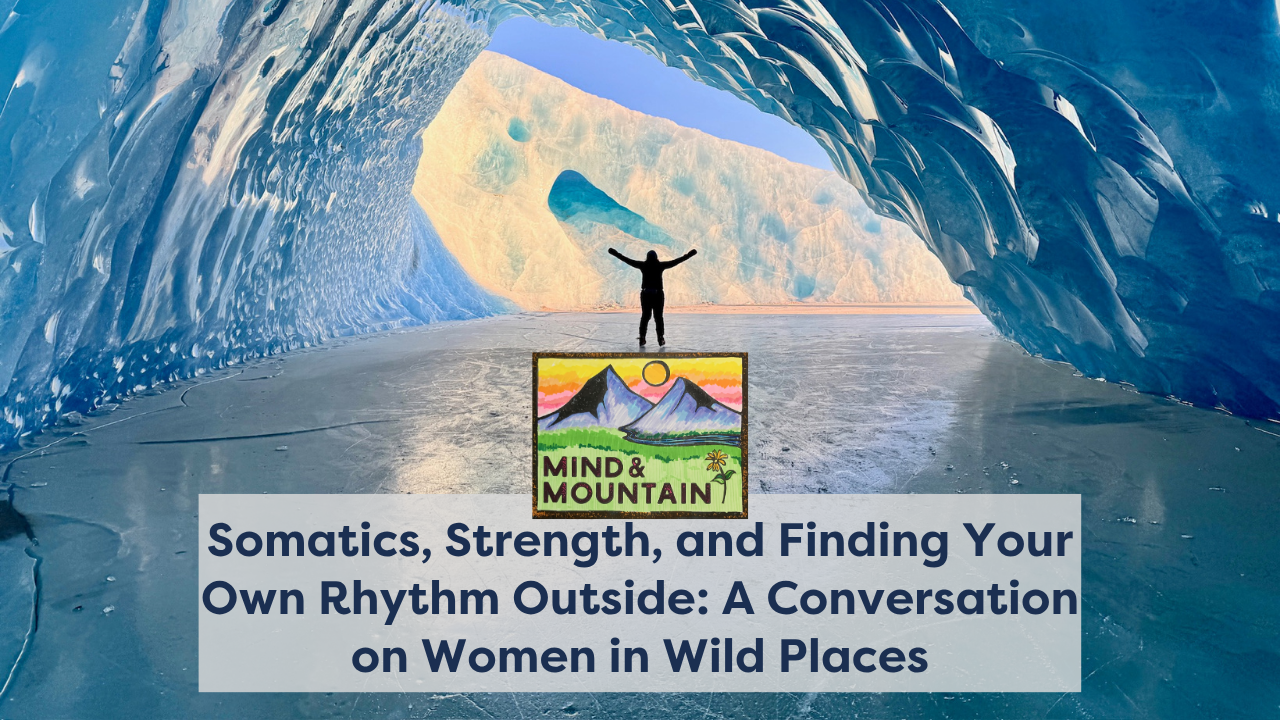
Somatics, Strength, and Finding Your Own Rhythm Outside: A Conversation on Women in Wild Places
I recently had the pleasure of joining Gabriella on the Women in Wild Places podcast, and gosh, what a fun conversation! Gabriella is such a thoughtful and curious host, and I really enjoyed getting to explore some of my favorite topics with her - the intersection of outdoor recreation, strength, mental health, and our nervous systems.
We covered a lot of ground, including:
-
❄️ The magic of wild Nordic ice skating in Alaska (one of my absolute favorite winter activities!)
-
🌿 What somatics actually means, and how our outdoor adventures can help us better understand our nervous systems.
-
🥾 "Weakest link syndrome" — that familiar feeling of being the slowest person in the group, and how to find more safety in moving at your own pace.
-
💪 Why physical strength is a safety skill, and how training our bodies supports our confidence outside.
-
❤️ Moving away from a mindset of conquering our bodies and the outdoors, and toward a more curious, relational approach.
-
🌸 How hormones, comparison, and perimenopause can influence our experiences as women in outdoor recreation.
-
✨ A simple somatic practice you can try right now (or the next time you step outside!).
One of the threads running through our conversation was this idea that our time outside can be so much more than recreation. It can also be a place to practice listening to ourselves, building capacity, and learning how to work with our bodies instead of against them.
A big thank you to Gabriella for being such a wonderful host! I hope you'll give our conversation a listen, and check out more of the great work she's doing with Women in Wild Places.
Listen to the episode:
And if you'd prefer to skim/read - here's the transcript:
Gabriella 0:00
Welcome back to Women in Wild Places. It's your host Gabriella. Today I'm talking with Sarah Histand, who joined me from Anchorage, Alaska, right as the first snow of the season was dusting the mountains right outside her window. She was born and raised in Alaska and has spent her life learning how to move with its big seasonal swings. She's a somatic therapist, a fitness trainer, and founder of Minded Mountain. Her work brings together outdoor recreation, mental health, and strength training all through the lens of the nervous system. In this conversation, Sarah describes wild Nordic skating on frozen Alaskan lakes, where the ice can be so clear that you can see fish swimming below you. We talk about the meaning of somatics and why recreating in and being challenged in the outdoors provides a container for self-reflection and nervous system regulation. Sarah shares practical tools for finding your own rhythm on the trail and how to shift from a dominance to a curious mindset in outdoor athletics. We also talk about inclusivity in the outdoor industry, strength as a safety skill, how estrogen might shape the way we compare ourselves to others, and what shifts in perimenopause. Sarah closes with a simple practice you can try right where you are, and I hope you'll take a moment to do it with us. Here's my conversation with Sarah.
Sarah 1:14
I am Sarah Histand, and I live here in in Anchorage, Alaska. And it's fall here. We actually just got snow in the mountains overnight for the first time, which is a little bit soon for that, to be honest. But here we are. And I've lived in Alaska all my life. I was born here. My parents are from the Midwest, and ended up landing in Alaska and stayed. And it was been a really great place to grow up and now make my life. I really love being outside and and the ways that the extreme seasonal changes make us really pay attention to what's happening outside and also adapt our lives and recreation with the changes in the seasons. In my work life, I have a fitness background and a mental health background, and I weave all of those things together. So it's outdoor rec, mental health, and fitness, and generally trying to figure out how we can be outside, have a good time when we're doing it, and use our connection to nature and the land to have a good life and take good care of ourselves and each other and the land.
Gabriella 2:22
Growing up in Alaska, you're forced to pay attention to the elements and the world around you. Do you feel like you were always connected to a sense of place and recreating in the outdoors, or did that evolve for you over your childhood?
Sarah 2:39
So my parents coming from the Midwest. When they landed in Alaska, they were just kind of figuring it out as they went. And then when they had my brother and I, we were doing some outdoor things. I think they stayed in Alaska because they were like, "Wow, this is a really cool place. What does it mean to be outside up here? But we're on maybe a learning curve while we were young too, and so we would do. I think of now as the Midwest version of Alaska stuff. There's some really nice canoeing that we would do. There's really nice canoe trails in South Central Alaska, and we would have a family routine of going out to a spot on a certain lake and camping there every summer. So some camping and some hiking and fishing, but in a smaller scale way. It took me getting into my 20s and 30s and starting to work for the Park Service and being exposed to people who are doing more ambitious and off trail things in Alaska to see more of what might be possible. But it's been a fun arc throughout my life. One of my earliest childhood memories, actually, is of being pulled in a sled, I think we were on our way to a cabin that was out a trail, and I must have been small enough that my brother and I-he's a couple years younger-were riding in a sled and getting pulled, and we had gotten pulled up around a puddle, but then the sled tipped, and we ended up wet in the puddle. And that's one of my earliest memories of being outside as a kid. Not not very fun. I don't think I was very pleased at that time, but
Gabriella 4:03
just being wet and yeah, clearly it didn't scare you off, though.
Sarah 4:08
I guess not. I guess not.
Gabriella 4:10
I hear that you're very into Nordic wild ice skating now. I'm really curious. Can you paint a picture of what that's like to spend a day ice skating in the wild, what are some sights and sounds and feelings that you experience?
Sarah 4:24
My gosh, yes, you have to try it if you're interested. It's so cool. The thing I am loving about winter these days is the wild Nordic skating that I've been able to really lean into over the last few years. My husband is super into it too. He does. He's an ice scientist. He's a geologist. He's also helping me learn that ice apparently is a rock. I didn't know this, and it forms in similar ways as rocks do. So he's doing the nerdy science and safety side of things, and gets us out to these incredible. Places we're going to lakes, sometimes rivers, but mostly lakes that have frozen over either before the snow has come. If it gets cold before it snows, then we'll have a really nice window of fall skating. Or there's other times in the year some of the bigger lakes might freeze over after it snowed, or or sometimes even after there's snow, you'll get a time where it's rained and then refrozen, and you get a refresh of a skateable surface. And the experience of ice skating on a lake that is off the beaten path enough, so there's just not that many people around, and the mountains are gorgeous in the winter. They're blanketed in snow. In we don't have a lot of sun here in the winter, but if you get it right, so that there's some sun and snow, and then you're on a surface that is beautiful and has so many different visual textures to it. The cracks have their own colors. Sometimes the ice has turquoise. Sometimes it's totally clear, so you can see through down into the water and see the bottom of the lake. And it feels sort of like you're scuba diving, but because of the view that you're getting, maybe you'll see fish, or you can see things under the water. That when else would you get to see that? It's just incredible. The sensory experience for me-it's the place where I feel the most free, movement-wise, because of ice skating. You take one stride and just glide, and it has this open, playful body feeling. The sounds of your skates hitting the ice, and very little other sound. It's just so beautiful. I skated a bit as a kid too. It's something that I feel like connects me with my inner child because as a kid, we would skate a little bit on the the lakes around our house, and I had a girlfriend who was taking figure skating lessons at the local rink, and I would beg my parents for ice skating classes. And I don't know if we didn't have enough money to pay for it, or for whatever reason I didn't get to take lessons. My best friend at the time, we had these dreams of doing figure skating at the Olympics. So it's so fun. Now I'm in my 40s in this era where I'm getting more ice skating in than ever before, and in some ways, those dreams have come to fruition in a totally different way than I could have ever expected. So, I'm loving it. It
Gabriella 7:29
feels very ephemeral and even more special. The fact that you know it's such a particular moment in time, and the ice has to be just right, and the daylight has to be just right, and it will not look the same the day before the day after.
Sarah 7:45
Yes. Oh my gosh. Yes, that's such a good point. That's a big part of it. It has to be perfect conditions. There's a sweet spot, and when it's good, you got to go and get it. And then, if it snows or if the weather changes, it's going to be gone. It is ephemeral. Perfect word.
Gabriella 8:00
I know for me, having those kinds of activities in the winter is really key for my emotional and mental well-being. Is having yeah, you feel that too. Yes, I've never gone Nordic skating. I would love to. I'm a terrible ice skater, but maybe I can bring that around in my 30s.
Sarah 8:19
Yeah. Well, the thing about Nordic skates, they're these longer blades. They're usually 18 inches long or so, so they're long and they clip onto your boots, so like onto your ski boots. And because of that combination, you tend to have a more comfortable boot. Ice skates are generally not super comfortable, but hopefully your ski boots are, and so maybe your feet can stay warmer and more comfortable. You can maybe be out for longer, and then the length of the skate helps it actually be more stable for people who aren't very comfortable on skates. It's a great way to ease that learning curve, and they're also long because if you're on a weird iced surface that's textured or something, it'll smooth out your glide. So yeah,
Gabriella 9:00
I think you could do it. Cool. Okay, so you can ski out and then swap from your skis to your skates. Yeah, yeah, you could. Cool, cool. I wouldn't say we have access to that kind of experience easily in upstate New York, but there's definitely lakes that freeze over that I know would be fun to skate. So you're inspiring me. You mentioned you work in mental health.
Sarah 9:30
Yeah, I'm a therapist. I'm mostly doing somatic therapy these days. I really, really like the connection between our mental health and our nervous system, and all that's happening through the body, so that's been a sweet spot for me.
Gabriella 9:43
Can you explain a little bit more about what somatics is? I'm a yoga teacher, and I hear a lot of people using the terms. I'd like to hear from you, a professional. How do you define somatics? It is
Sarah 9:55
interesting how there's a lot of that conversation about nervous. Somatics in the online space these days. So when I'm talking about it, I'm talking about the way that our physical body, or might also think about it as our animal body, responds when under stress, and then also when under lack of stress, or when the stress is over, when we're relaxing. The question is, when something intense happens, can our nervous system, does our body show up with the right amount of activation for that situation? Or when something intense happens, does it show up with that activation and a whole lot more because of all the stuff that it's bringing from the past with it?
Speaker 1 10:38
One of the
Sarah 10:38
ways I've felt this myself through the ice skating example is that sometimes we're out on these lakes and the ice will crack, like it settles and it pops and it makes this big sound and it's spooky because you're like, oh geez, what was that? Before I did my own personal deep dive into my own nervous system and somatic work, I would hear that sound and even though I cognitively knew it was just the ice settling, I would get a huge adrenaline rush and get really scared and kind of freeze up.
Gabriella 11:10
Yeah,
Sarah 11:10
like to kind of have trouble thinking.
Gabriella 11:12
Yeah, even you just describing that, I can feel the physical reaction.
Sarah 11:17
Yeah, yeah. So that's the somatic. The soma being the body. What is happening in the body when we're experiencing a stressor? As we learn how to notice that, and then also support the body in recognizing safety cues and not just the threat cues that are happening, and maybe in discharging stuff that might be stored from previous stressors in the past, that intense activation that would happen for me would sort of feel almost like my body was a gas stove that been left on, and so when you come to it with a flame, it just poof, kind of explodes, you know. Rather than if you just turn a gas stove on from nothing, it lights up just the right amount. And so after doing quite a bit of work with my own nervous system, now it feels more like that gas stove. I kind of know how much flame I'm going to get when I hit a situation instead of that extra explosion.
Gabriella 12:11
That's a great example. How do you find the relationship between somatics and the nervous system and outdoor recreation? How do you see that dynamic interplay, and why is that a central focus point for your work?
Sarah 12:27
The outdoors for those of us that love to be outside, I think we get the way that nature and being outside can be really supportive for our bodies. We like to do it because it feels good and it brings us joy and beauty and connection, and also the outdoors isn't always pleasant or fun. Sometimes you fall off your sled and in a bit of puddle, or the weather turns, or you end up on a harder hike than you meant to. There's things that go wrong too, and so there's ways that we're exposing ourselves to stressors in search of pleasant things, but sometimes it's not so pleasant, and that dynamic is some of what we get to play with. We might really be supported in our mental health by being outside, but it can also poke at all of our soft spots. Like another example that I myself and a lot of people I work with experience is something we call weakest link syndrome, which is a name for being the slowest one in the group, where you feel like you're holding up your friends, and that can be very challenging on a mental health side of things. Focus on, am I good enough? So you might be going outside to have a good time, but you actually might be kind of triggered by some of the situations that you end up in.
Gabriella 13:40
What are your thoughts around weakest link syndrome? I can say I've personally had that myself many times, especially because I'm often the only woman in a group. Automatically, I then consider myself the weakest link physically. Whether or not that's true, what are some of the tools that you suggest to someone that might be experiencing that when they're outdoors.
Sarah 14:05
One of the things I want to say first is that these outdoor situations that we find ourselves in are great illuminators. It's one of the reasons I really like outdoor recreation as a place to practice and learn about these mental and physical health topics because we end up feeling these similar dynamics in other realms of life. I mean, you're a parent, so I'm guessing there's a version of weakest link syndrome that happens with parenting all the time too. Like, am I keeping up with all these incredible other parents that I see on Instagram? I don't, you know. Yeah, you're nodding. Yeah,
Gabriella 14:41
there's a lot of comparison and being in the outdoors in general. Whatever unexpected scenario that you find yourself in, to be willingly putting yourself into challenging situations. Say, say you're going on an objective and something that you know might be pushing your limits a little bit. How do you prepare for that mentally versus how it actually feels in the moment? And then, of course, there's the reflection that comes afterwards.
Sarah 15:08
My theory with all of this stuff is that if we can see it and work with it when we're outside, and and figure out some strategies that support that same awareness, could be carried over into these other areas of life where maybe the same dynamics are playing out, but maybe they're not as obvious. Since outside, I can't help but notice that I'm cold and stressed and hating it. Like I can't help but notice that, but the same dynamics would be playing out likely when you're navigating a stressful work conflict or email situation, and they're just more subtle because they're not so sensory for for things like weakest link syndrome, especially I'm always looking at the nervous system layer to those and the way that our bodies might be reading the situation as something that feels not as safe. And for weakest link syndrome, it really relates to me evolutionarily. Our ancestors being in communities that had to move from place to place with the weather and with the animals, and needing to actually keep up with your tribe in order to survive, because you're dependent on this group of people for your survival. And if you can't move along with them, there's stories of Native Alaskan women being left behind and needing to do that for the good of the group because the group needs to keep going. There's actually this really cool book called Two Old Women that talk about being left behind and then actually how they survived and found their way back. But I think that question, that like essential body question of "Am I okay? Can I keep up? It's like our body's kind of waving some red flags when we're not actually physically keeping up with people outside. So, if we think my body's not feeling safe right now, when you're having those weakest link syndrome, feeling like you're too slow, the question becomes instead of what do I need to change about the situation, it's what does my body need to feel safer, and often that means things like maybe slowing down a little bit might actually be one of the things that your body needs to feel. Because if we're rushing ourselves and moving at a pace that's not really our comfort zone, that's going to stress ourselves out a little bit more, rather than stepping back and falling into your own rhythm. And then other things like orienting yourself to the people that you're with, and seeing if you can really notice if they're being bothered by a different pace or not. One of my strategies for that is even when I'm the slowest one in the group, to remember what it's like to have someone be slower than me, and remember that when that's happening, I'm not frustrated with them. You're not usually. Yeah, I'm not bothered. I'm usually really compassionate, and I want them to feel comfortable. And those strategies of helping our bodies remember what it's like to be both in that faster role and in the slower role, and notice how that can be a safe dynamic to be in, rather than one that means there's going to be some kind of conflict here.
Gabriella 18:01
We're usually a lot harder on ourselves than we would be on other people, so remembering that is incredibly helpful.
Sarah 18:09
And there's something in the nervous system that really appreciates a shared rhythm. Being at the pace that's similar to others is how it shows up when you're recreating, but it's the same thing that we gravitate to when we're like going to a show, going to a concert with other people, and I think inherently comes from being a baby and being rocked, sharing a heartbeat with the body that you're in, and then being rocked. Those are these shared rhythm, innate sort of safety cues for the physical body. So it can be kind of jarring when we're moving at a different rhythm than the people that we are with, then we do have to come up with ways to find some shared rhythm. Even when cases are different, that might just mean that you make a plan to meet at a break spot up ahead, and maybe the shared rhythm that you have is that you're sharing snacks, and then we walk a little bit separately, but then we come back together for stacks. I love imaginary resources too. You can access the sense of companionship just by imagining that you have somebody with you, or if you're somebody who connects with animals, maybe you imagine that you have a dog alongside you.
Gabriella 19:16
A lot of that is opening up communication. If you're in a group situation, I know what it's like to be thinking about how I'm performing in a group, and then realizing I haven't actually said anything out loud about it. So maybe you're feeling concerned about your pace, but then you stop and you discuss with your group, and it's something that maybe they haven't noticed. Are you just thinking these things in your head, or are you actually verbally expressing them to your group,
Sarah 19:42
yeah, yeah. A lot of that nervous system safety can come through that social nervous system work of communicating about what's happening. This happened to me on a trip I was on where I was stuck in this kind of loop, feeling like I was the slowest one in the group. I was especially comparing myself to my girlfriend who was. There and her partner, because I swear they were in front the whole time breaking trail. It was a winter trip, and I was like, I wish I could keep up with those guys. And then we got together after this trip, and I was telling her about that experience, and she was like, "Are you serious? I was comparing myself to you this whole trip. And I thought, "Why can't I keep up with you? And so we were having the same inner dialog. So wild how our internal perception can be so different than what's actually happening because we're inside of a stress response. Our senses only take in certain information about the situation, so it can be really helpful on a body level to realize, oh, I'm in a stressful situation here, so I'm probably only getting part of the information of what's actually happening,
Speaker 2 20:43
and then
Sarah 20:44
some of the somatic skills can involve intentional looking for cues for more information, like what else is happening here,
Gabriella 20:53
right? Because when you're activated, activating another part of your brain that is then reducing your your input elsewhere. That's reducing your reasoning to a sense.
Sarah 21:03
It does generally when we're in a stress response, when we have some activation in our body and are feeling less safe. The bridge between our prefrontal cortex, where we do a lot of our cognitive thought and ability to plan and take in information and strategize, the bridge between that and the brainstem, where the stress response is usually going off, that actually physically gets smaller. So there just there's not enough room for information to move in the same way. So you actually can't access that prefrontal cortex thought area as much. It really does take some work then to slow down enough to be able to get more information of things that are easiest to notice inside of that stress response are the things that are more stressful. The threat cues they tend to be louder, and it's not that we don't need those because we really do need that mechanism for identifying when things are going wrong and figuring out how to respond. But it can get a little bit out of balance, sometimes when we're not in a life or death situation, we're just in something that's challenging, and maybe we're over reading those threat cues and have to be more intentional about learning to look and notice the quieter signals of things that are okay or supportive are going to help us get through this Challenging situation,
Gabriella 22:23
right? We get activated from everything from being on the slippery mountain all the way to receiving a contentious email from someone that we work with, and maybe we're not always so good at identifying the difference between what is a safety issue versus this is just activating me mentally. I'm not in danger.
Sarah 22:45
Ah, it's wild, really. The body does not know the difference in the physiology between a stress response that's caused by being on exposed slope, where there's consequences that I need to be really heads up about, and exactly like reading a really intense news headline or opening up an email that wasn't what you expected. So that's why the strategies can also overlap. Things we use when we're outside can also help us in these more mundane, regular life situations.
Gabriella 23:14
How we connect to our bodies, how we understand the activation of our bodies, and then there's the other layer there, which is strength. To engage in outdoor recreation, you do need to have a level of strength in order to maintain safety. That's part of why we need to take care of our bodies in order to recreate outdoors, is because strength helps us stay safe. Can you talk a little bit more about the interplay of strength and these other dynamics. How do you see that as essential, especially for women in the outdoors?
Sarah 23:48
Yeah, the strength part of things, like you said, we do need the physical strength to be able to do challenging things with our bodies. Just using somatic skills to try to convince your body that you're safe. We we have to have the real strength underneath that to be able to carry through. Just trying to talk your body into being safe isn't going to work if you don't also have the fitness or the skill set behind it to back it up. We're trying to help our bodies feel safe when they have the ability to move through the situation, but we're not trying to use these skills to keep ourselves in dangerous situations where we actually need to make a different choice. That's a nuance there that I feel like gets missed on Instagram and stuff too. But yeah, on the strength side, a lot of the work I do is with pre-training for outdoor rec, and we do that through body weight interval training, which helps build the muscles and the cardio and the muscle memory for some of the weird stuff that we ask our bodies to do when we're outside, which is never as straightforward as a lunge in a gym. You know, it's just never that
Gabriella 24:58
walking upstairs. Not caremaster. Yeah,
Sarah 25:01
yeah. It's always at a weird angle, or
Gabriella 25:05
carrying an uneven load, or twisting to help someone.
Sarah 25:10
Yes, if we think about it again on a nervous system level, those are all little risks that the body is taking, and they can flag as threats if we're not practiced at them, and if the body isn't actually able to maneuver in that way, so there really is like again a nervous system component to preparing our bodies for the outdoor time through the strength part of
Gabriella 25:34
it, like repetitive exposure. So both getting stronger with these unusual movements and also more comfortable with them by practicing them many times over.
Sarah 25:44
Yeah, exactly. Yeah, and if we can expose ourselves to those movements in a safer environment, like in your living room or inside where you are on flat terrain and it is a steady temperature, and you're not having to navigate all those other little conditions questions that we have to do when we're outside, then we get a chance to move the body through some of the movement pattern questions. Am I safe? Can I do this in a safe environment and build that muscle memory in that controlled environment, and then take it outside where things are a little bit weirder, and hopefully your body has a higher threshold for that weirdness because it's played around with it in a different way before,
Gabriella 26:27
and you can sort of tap into that safety of remembering what it feels like to be doing that in your living room, even though you're outside and maybe have weather exposure.
Sarah 26:36
Exactly. Yeah, there's times when, and people tell me this who have been in my workouts too, where it's like I just did a split squatter outside. One for me was a section of a hike I was on recently that was a snow field, and my one foot kind of slipped down. And there's a move that we do that's a center loaded lunge where one foot's on a gliding disc and you slide it out to the side while you lunge or you bend the other knee, and that's very much like being on a slippery snow slope, or sometimes it's just mud where you just lose your footing on one side, and you have to catch yourself with the other foot. And man, if you've practiced that in your living room, and your body has some muscle memory for what to do, and yeah, that was a little bit unexpected. But I also know how to recover that that I'm going to be okay, and that just lowers the stress signals that your body is likely going to be sending in those outside moments.
Gabriella 27:31
Your body already innately knows how to respond, and then when it does happen, you're not so activated that you can't then proceed with what you are doing. That happens to me, especially in the winter, if it's really icy and I slip, and then I catch myself, and I haven't even had a moment to think about it. And then I realize I just did a yoga pose, and I caught myself from training my body over 1000s of asanas over the years that my body just knew how to respond, and I didn't have to think about it. And then it's a lot easier for me to shake it off. Whereas sometimes, if you have that moment and it's so activating, and then you have that chest feeling or belly feeling, even if you're safe after, you can still feel the residuals of that sometimes, which I know for me make it harder. I remember moments on expeditions where I felt so freaked out. Then I'm shaking. I, I got so nervous. Now I'm shaking and had such an adrenaline response. And then I feel exhausted. So it makes it harder than for me.
Sarah 28:31
Yeah, that's so real. Yeah, I've been in both types of situations that you're naming there myself, and the first one where you can catch it and it reminds you of something that you know already, like your yoga asana. Then there's almost a little win there too, where you're like, "Oh my gosh, I just did that thing! Like in therapy, there's the idea of post traumatic stress disorder, and then also there's the idea of post traumatic growth, where if we go through something challenging and come out feeling like we responded well in that situation, and there's a way that the nervous system kind of bumps out in capacity. I can do these hard things, and I can do them well. And look at me go! And there's a feedback loop of expansion possible there. And then, of course, in these other situations where it was more intense, and we end up with that shaky adrenaline feeling too. That's so real too, and I just want to make sure nobody feels like in if that happens to you that you've done something wrong in your nervous system because that is just inherent in these outdoor situations. Sometimes these days, when I run into moments like that, I'm trying more to help my nervous system come down out of a stress cycle, come ride the backside of the wave, and there are lots of different somatic strategies we can use during that phase of a cycle too. How do we tend to the body now as it's dropping all this adrenaline and feeling shaky? And some of it means actually letting the body shake if it wants to shake, and maybe helping it feel some support, whether that's through feeling the ground underneath you or getting some food in your body so it has some calories to refuel after that big lift that it just did, or maybe it's physical touch support from somebody who you're with? Who wants to hold your hand or put a hand on your back? There's different ways to help the body roll through that phase of things. That sounds like somatic tools. Maybe some of us are using without even noticing it. Sometimes I'm so glad you said that because that's something I really like about this work too. When I was starting to train through the somatic experiencing modality, I was really impressed at how natural a lot of it felt. Like it's stuff that our bodies know how to do, and maybe we access it just inherently, especially more traditional indigenous cultures and people living close to the land. I think a lot of this might have been things that we had ritual and traditions around supporting our bodies in, and the somatic experiencing modality was created, discovered through studying animal behavior, actually, and seeing the ways that animals had a bunch of very close calls with life or death, and seemed to be able to move through those cycles fairly well without having the same sort of PTSD response that we see in humans.
Gabriella 31:30
Right,
Sarah 31:31
and we do see that in animals in captivity. It's a little bit different, but wild animals generally are able to move through that stress cycle fairly well and not necessarily have the same trigger of if I come back to that exact same meadow where I almost ran into that wolf. It's like I'm never going back to that meadow again, and we don't see that. They come back through the meadow.
Gabriella 31:50
They're able to reset their systems a little more naturally than we are, at least in this day and age.
Sarah 31:56
Yeah, exactly. And the idea is that our animal body, as well, our nervous system has that same ability to move through these cycles in the way that animals do. We just also have this prefrontal cortex again that's so brilliant at planning and strategizing, but it's also really good at suppressing our body's natural responses, which is helpful very often when we need to navigate a stressful situation at work. We kind of need to suppress our flight response because we can't run out of that room right then. It's helpful, no question. But then we also do need times when we can kind of disinhibit our bodies enough to be able to let those cycles complete.
Gabriella 32:37
It's kind of the whole challenge of being human. I think about it a lot when I'm teaching yoga. I always say yoga is going back to the things that we naturally do when we're little kids. I think about it when I watch my son and the way he plays, or if he falls and rolls over, and how he brushes it off. And I can watch the progression when I'm teaching a yoga class and see people start to come down. It's really fascinating.
Sarah 33:02
That's really beautiful. Yeah, makes so much. I'm not a parent, but that seems like one of the very cool aspects of that path is being able to watch these primal responses happen and feel them in yourself too.
Gabriella 33:15
Yeah, he's teaching me a lot about how I respond to stress, and I'm learning so much about myself, and
Sarah 33:24
so cool. Like, let it out too. I think kids are so good at that. Yeah, learning the way they're able to just be themselves and let it out sometimes.
Gabriella 33:33
Definitely, tell me more about Mind and Mountain, and what inspired you to create your business.
Sarah 33:40
Mind and Mountain. We are celebrating our 10 year anniversary this fall. Actually, so I know it's very cool. Yeah, it's been really neat. I wouldn't have guessed where it was going to go 10 years ago when I started it. In that time, I was really seeing these interrelationships. I had been working at a gym, finishing my social work grad school and learning how to backcountry ski, kind of all in that same era, and I was very clearly seeing how the fitness classes were supporting my mental health, and how the clients that I would see in the mental health side of things felt like they could benefit by connecting with their bodies a little bit more, whether that was outside or in a fitness class, and then outdoor rec felt like it was so supported by both of those other realms too. Both the training I was doing in the gym, and then the things I was learning about my own mental self talk. And I ended up doing a backcountry ski race that year, and kind of blew my mind with what I found myself able to do with that skill set on board, and realized I wanted to see if there was ways to combine all of those and practice it in community with other, mostly women who come to Mind in Mountain. It's not exclusive, but women-centered space because of some of what you named earlier. What it's like to be a woman in the outdoor space. We don't always see models for being with our fullness and and our cycles, whether it's monthly cycles or our life cycles. Because now I'm in this perimenopause phase of things, and that's its own really interesting phase of the life cycle. I have felt so much in my own sense of power and coming into my whole self through my experiences outdoors, and want that to be available to more and more people. And I really believe that the outdoors are for everyone, even if we don't always see it like that. Though I love to see how that seems to be changing these days,
Gabriella 35:42
that is something I wanted to talk to you about: is how diversity and belonging informs your work, and what would you envision your ideal outdoor recreation world to look like in terms of inclusion?
Sarah 35:56
Wow! Yeah, I would love our outdoor recreation world to look like our world looks like to have
Gabriella 36:05
very
Sarah 36:06
similar numbers of people of different races and body types and abilities participating and also being uplifted in the outdoor space. It's so tempting for brands and social media to show the big flashy first descents and accomplishments and the most extreme parts of the ways that we show up outside, but really, if we think about being outside in a more expansive way, stepping out your door outside, and that can be just as meaningful. A walk around the block or a walk to the neighborhood park can be just as powerful of an encounter with nature and with yourself as doing something really extreme.
Gabriella 36:47
Yeah,
Sarah 36:47
that's never been done before. I also really would love to see us move from a culture of dominance where we're trying to conquer things outside. For me, one of the things that really bugs me about that way that we've been taught to be outside is that we've also been taught to be that with our bodies, to figure out how to dominate our bodies and get them to do the things we want to through top down kind of dominance. And a lot of my work is trying to get us back to a more relational experience, both with our bodies and with the land and with each other, I just feel a lot of our mental health issues come from that dominant place. If we can come back into listening to and trusting and working with our bodies and each other, that's just going to change so much of our experience.
Gabriella 37:37
Especially with outdoor recreation and athletics, there is a big focus on performance and competition, whether that's with other people or just internally. I know I'm very competitive with myself, and I can set a lot of goals for myself that I then will put myself into a box and can sometimes be harsh on myself in order to try and achieve certain things, which I think is pretty in the outdoor athletics world. This kind of focus on domination of a goal. What are some alternatives to that?
Sarah 38:13
Yeah, good question though, because I don't know that competition is always bad. Yeah, it can be really motivating and fun, even if we're feeling safe at the same time. So this is what I think about on this nervous system lens again. Too nervous system kind of hinges off of center point of how safe the body's feeling. So if we're feeling empowered, know that no matter what happens, I'm going to be okay. Then it can be really fun to get into competition and be like, "Gosh, how hard can I go here? And we do a lot with workouts about uncoupling the experience of activation and intensity and threat because sometimes the body reads those as the same things. Like if I'm working really hard, I must be running from a tiger. This is bad. So there's maybe some work to do to help the body understand that we're doing this, but we're doing this by choice, and we're doing this for fun. Why do I like feeling like I'm being chased by a tiger? I don't know what mental mental state that is, but I know same. Yup, I really had to take a break from that kind of intensity for a while to help kind of untangle this. I think it was a pretty deep overcoupling I had about if I'm really good at stuff, I'll be safe. So I had then felt a ton of pressure when I was being competitive to do well, and if I didn't, I would really feel quite bad. And I think it was because of that overcoupling of thinking: if I'm not doing well, I'm not good enough, not safe, not belonging. And after stepping out of that for a while and letting go of the pressure to keep up and to do well for a while, I was like, I don't even know if I'm going to be able to get back into doing hard stuff in the mountains because it's maybe just too much for my nervous system. But as those things uncoupled and my body started to learn, it could be safe regardless of how well I do. Things now. I'm coming back into having the best hiking summer of my life right now, which has been so fun. Which is why I'm like, I don't know if I want to snow yet, but from a really different place of just really enjoying it and being able to push my body quite hard, but without those layers of if you don't, I'm gonna have a really nasty self talk spiral afterward,
Gabriella 40:24
like the judgment.
Sarah 40:26
Yeah,
Gabriella 40:27
judgment, yeah. I have found in speaking to different people, it feels like that feeling is a little more outsized for women in particular. Um, and maybe I'm generalizing a bit, but just more of that judgment or comparison, especially in the outdoors. So I'd love to talk more with you about your experience as an outdoor athlete, as it pertains to the female body in particular. What have you learned about fertility, perimenopause, menopause, and the seasonal changes that we experience
Sarah 41:00
as women, as that relates to outdoor athletics. Gosh, yeah, great question. There's a lot to say here. I agree that it does seem to be more outsized for women. I'm a white woman, so I'm also curious about if that's true for women of color. Probably extra, I'm guessing. And there's such a cultural component to that-the ways that we just haven't been shown people that look like us, that act like us, as leaders, as people who do this thing-and so there's then always the measuring against something that's not us that we have to do. It's all happening probably below the level of conscious awareness, but like those subtle messages of not quite being the right fit for this. I think a big part of what we're often measuring or running up against when we have those kind of comparison thought patterns. And then the other thing that's really interesting about that is that I think there might be a hormonal piece of it that's not insignificant because one of the ways estrogen works in our bodies is that it helps us prioritize connection, social connection, and probably is a big support when we're parenting, like prioritizing the needs of others. And as humans, we are often in this dilemma of do I prioritize myself or others, and estrogen weights that balance for us toward prioritizing others.
Gabriella 42:28
Interest and
Sarah 42:29
shines the light more on what other people are doing rather than what's happening inside
Speaker 1 42:34
us.
Sarah 42:35
So I really wonder how much of that dilemma that I myself was in for so long about feeling like I had a hard time keeping up, or was measuring against other people, I've done a lot of therapy around that, a lot of nervous system work around that pattern. And now in perimenopause, where my estrogen levels are dropping, I am using some HRT to help them stay up enough so that my joints feel like they can still do these hikes and things. But I really notice there's less of that noise, and there's maybe something that happens as estrogen reduces that we can get some of that attention back for ourselves, and maybe feel safer moving at our own rhythm and comparing ourselves to just ourselves rather than having that happen externally. I'm finding that really interesting these days.
Gabriella 43:23
Fascinating, yeah. I haven't ever considered that. You hear so much about how your monthly cycle is connected to the way that you perform on the weekly basis, but thinking about it over the span of your life is also interesting in the hormonal changes that happen. There was a huge shifting point for me. Pregnancy, obviously, and all the changes that happen in your body. That coupled with the emotional and mental impact of how do I fit into this identity that I held prior to motherhood of being an outdoor athlete versus after.
Sarah 44:01
It's so real, massive things changing in priorities and hormones along alongside that.
Speaker 2 44:09
Yeah, yeah.
Sarah 44:09
If you're not yet in the perimenopause phase of life cycle, but are kind of curious about this estrogen level of awareness, it's kind of nuanced because it's subtle-ish, but maybe it's not as subtle as we realize because maybe it's actually impacting us pretty loudly. But the estrogen levels change throughout a monthly cycle too, so you might notice as a caregiver if there's a difference between how easy caregiving feels during the first half of the month when you have estrogen, and then when it starts to drop during the luteal phase when estrogen's low, it might be harder to want to give your attention to somebody else, and some of why we're grouchy during luteal sometimes because we're like, leave me alone. I like don't want anything to do with you, and that might have to do with lower estrogen and wanting your attention for yourself rather than others.
Gabriella 44:56
Yeah, that's so interesting, and I think it's something that feels like it. Being brought a little bit more to the surface now, I don't remember ever even hearing about perimenopause five or 10 years ago. It was just either you are able to bear children as a woman, or you've gone through menopause, and there wasn't a lot of discussion about it. It just felt very black and white, and also something that people didn't really talk about. So I'm excited that there's more conversation about the nuance and everything that we go through and experience from a hormonal perspective. It makes me hopeful that there's more discussion about it now.
Sarah 45:33
Yeah, same agreed. I don't remember hearing much about it very long ago either, and I feel really grateful that there's conversation happening now because it's helped a ton to have information and resources and myself to experiment on and communities to to talk about it and hopefully more research happening too. It seems like there's like a wave of interest in this area and like long overdue. Yes. How can people learn more about Mind and mountain, and become involved in your work. The way that most people enter into the mountain to mountain world is through training. If you are looking for strength training support for whichever season you find this in, you know we're moving into winter season here. If you live somewhere where there's winter, our ski babes program we start up in the fall and run that through the winter season, and then we have a summer strong version for the summer sports in our lives. We have a we have a seven day trial. I'll give you the link so you can tag people up for that if they want to experiment with. We call it mindful interval training because it is that idea of also learning how to track your nervous system and your body through your stress cycles in your workouts, and learning how to be more relational with our movement rather than dominant. And we usually find that that changes a lot of things for people. And also, I'm on Instagram; it's my social media platform of choice these days. And I also have a podcast called Co-Regulation Conversations. If you want to nerd out on nervous system stuff, I definitely want to nerd out on that because I feel like I have a million more questions for you. We can send our audience there so they can do more of a deep dive than what we were able to cover today. Welcome to the rabbit hole. I love this stuff so much. It's been a real fun journey to be on. So, can you tell me a somatic practice or a nervous system practice you've been really
Gabriella 47:30
enjoying lately?
Sarah 47:30
It's kind of funny. I teach a lot of practices and practice them myself, and it turns into a lifestyle. That's what I would encourage people to think of this as. Is we might think of them initially as a practice, but as our bodies become more practiced at it, the skill is to be able to notice things that feel good when they're happening. Just right now, what we can all do together is see if you just let your attention kind of widen out a little bit, and that might be your visual attention. You might look around your space, or it might be your body. Maybe you sense the way that your body is supported by the chair that you're sitting in, or even just your feet on the ground, or maybe there's a nice smell or something handy beside you that you can touch and enjoy the texture of, so basically anything that you're coming into contact right now is a pleasant sensory experience, and you could hang out with that for as long as you want. This can be really useful to just let your body attune to the sensory experience of something that's okay or even nice, and notice what happens there. Sometimes there's a softening in your chest, or a deeper breath, or maybe your belly starts to rumble. Lots of things can happen in the body, but then it can also be really nice to keep a little bit of awareness on that, and then go back to your regular life. Go back to your regular conversation and see what it's like to keep a little bit of awareness on the things that are okay while you're going about life. For me, that's gotten a lot easier with practice. To I feel like my body is kind of always now a little bit aware of something good or that's okay.
Gabriella 49:24
Yeah,
Sarah 49:24
just going about my days now, and that makes coming across that email that I wasn't expecting or that headline or whatever. It makes it a lot less jarring.
Gabriella 49:33
And I like how simple it is. It's so accessible. It's free. You don't need to buy something. You can just be present and mindful in your own state. Everyone can do that at any moment.
Sarah 49:46
Yeah,
Gabriella 49:46
yeah, yeah.
Sarah 49:47
Me too. It's really simple, and you-I mean, our our voices both slowed down a notch there after just checking in for a moment on that little pleasure anchor. It's powerful. Really simple things can make. A really big difference in our nervous system state, and then that changes everything. Because if you're in a different nervous system state, then your perception of the world is really different.
Gabriella 50:09
We can actually take it all in instead of being locked into our our stress response. If we're activated all the time, there's so much that we're missing. Yeah,
Sarah 50:21
and there's so much in our modern life that's kind of designed to keep us activated, and there's a lot of momentum toward that spiral of one thing after another. It really does take some effort to separate from that and notice the other things that are happening. Then once your body connected with the rest of the story, then it does feel really different to get back into modern world. And I find I can move through things more efficiently, get more done, and take breaks. I'm not always more efficient these days. Sometimes I'm realizing my body needs more space, but it can be pretty dang effective when you're in a grounded nervous system state. It's not all about being a pleasure all the time. Sometimes it just means I'm feeling safe, and that helps me do the things that are more challenging.
Gabriella 51:07
It's a whole other conversation about efficiency and what that means, especially in this society. Like, do we need to be constantly efficient every second, or are we being trained for that?
Sarah 51:18
Right. I agree 100%
Gabriella 51:21
What's something you want to leave the audience with in terms of how they can go out and experience a wild place and feel more connected to themselves?
Sarah 51:31
I would keep this very simple. I would invite you next time you step outside to see what your senses notice about that experience, so see what the quality of the air feels like and what catches your eye. That's a first step. What's the sensory experience that's happening, and then the second step of that would be what happens in your body then when you notice when you're connected with the sensory experience of having stepped outside, whether it's just out your door or if it's out in a really beautiful place. I like that one two step of what are my senses noticing, and then what happens inside, and that's another layer of this relational experience that we've been talking about today. What's the relationship between my body and the environment and nature.
Gabriella 52:23
I love that. I think everyone listening will be able to relate as well because our audience is so interested in the outdoors. I think everyone will innately feel this and understand it on a cellular level. It's really nice to put words to things that we don't always know how to describe. So I'm really excited for everyone to hear more about you and your work. So that was super fun. I know lots of good stuff to talk through. Thanks so much for listening to this episode of Women in Wild Places, and a huge thank you to Sarah for sharing her wisdom around somatics and outdoor athletics with us. This was so interesting for me. And if this conversation resonated with you, you can find Sarah and all of her programs at MindandMountain.co. Her Ski Babes Winter Training Program is enrolling now, and she offers a free seven-day trial of her Mindful Interpol training subscription. You can follow Sarah on Instagram at Sarah M Histand, and if you want to go deeper into the nervous system world with her, check out her podcast Co-Regulation Conversations. I'll be listening because I still have so many questions. And before you go, I'd love for you to give Sarah's invitation a try. The next time you step outside, notice what your senses take in, the feel of the air, and whatever catches your eye. Then notice what happens in your body. It can be as simple as a walk around the block or a hike in your local park. If you enjoyed this episode, please follow Women in Wild Places on Spotify or Apple Podcasts or wherever you're listening, and make sure to leave us a rating and share with a friend. It really helps others find us. You can also find more stories and updates on our Substack at womeninwildplaces.substack.com. Until next time, I'll see you out there.
Transcribed by https://otter.ai