
Technical Skill and Nervous System Support Aren’t Separate
This blog is in preparation for Mother Ducking: Nervous System–Centered Outdoor Leadership, a new course I’m partnering with my partner Luc on this May! Full course details can be found here, but this blog is a great run-down of why these skills are so important!
It’s not just what you teach, but how you teach it
Luc - my loving partner and a professional outdoor skills instructor - frequently gets feedback like:
“This is the best class I’ve ever taken!’
And not once in a blue moon - consistently. In every class he teaches, the feedback he receives is glowing.
He’s won national awards for his instruction. His courses, whether it’s packrafting, ice travel + safety, or route finding, really stick with people in a way that is so impressive!
He’s incredibly good at what he does for a lot of reasons. He holds himself to a high standard, he loves to nerd out on risk management and safety planning, and he’s passionate about the things he teaches. I’m so proud of him!
It’s also amazing to have a partner that is so open to learning new things… from me!
From years of adventures and doing life together, I’ve been able to pass along a large amount of my own skillset to Luc - somatic nervous system education and mental health awareness.
We’ve also been practicing them together on our trips, and since bumping up against triggers and challenging situations is part of outdoor time, AND I have/had a particularly sensitive nervous system - global high intensity activation, topic for another time - we’ve both had a lot of opportunities to practice these skills and reap the benefits.
Luc has then been able to take these nervous system skills and integrate them into his courses, allowing for real-time application while he’s running scenarios. He often talks about how it’s made all the difference for him as an instructor, and for his students.
The missing piece in outdoor education and recreation
Outdoor training (for pros or recreationalists!) does a really good job of teaching us what to do.
It traditionally focuses on the hard skills that one needs to technically + safely navigate an experience. Things like specific skills, gear, decision-making, and risk management.
What almost always gets missed is what’s happening inside the human while they’re exposed to these things.
Their nervous system.
Their stress response.
Their capacity to stay present when things feel intense or scary.
When this isn’t accounted for, people will hit a limit, because the environments where we’re asking people to learn (or asking our friends to step out of their comfort zones) are potentially really scary.
Think about it, we’re:
- Trying something new/asking folks to be a beginner
- Often in/on unfamiliar terrain
- Managing real vs. perceived risks
- Navigating uncertainty, social pressure, and occasionally real fear
It’s a lot! The instructors, group leaders, and ralliers of friend groups among us are out there working with nervous systems all day long.
I’ve seen time and time again, when nervous systems are supported and shown safety, that’s where the magic happens. So how do we learn to support this?
Two Sets of Skills That Change Everything
Spoiler alert - this blog is leading up to the announcement of a course that Luc and I will be co-teaching this May (more details below… keep reading)!
It’s something we’ve been thinking about doing for ages, and instead of waiting for perfect timing (no such thing, right?), this spring we decided to go for it.
When we started planning the course and really looking at what kind of skills we wanted to focus on, we realized that the work falls into two big buckets.
Bucket #1 - Building the Container (So More Things Go Right)
This is the foundation. It’s everything you do before things get challenging that determines what happens when they inevitably are.
It looks like:
- Creating a sense of psychological safety
- Helping people feel connected and included
- Making it clear they can speak up
- Giving them enough resources to stay engaged
When this is strong and present, people have more room to stretch. When it’s missing, even small challenges can tip someone into overwhelm.
This bucket is about Preparation and Prevention. This work helps everything go better. And it helps people feel safe enough to speak up before things hit a crisis point, which means we can intervene earlier.
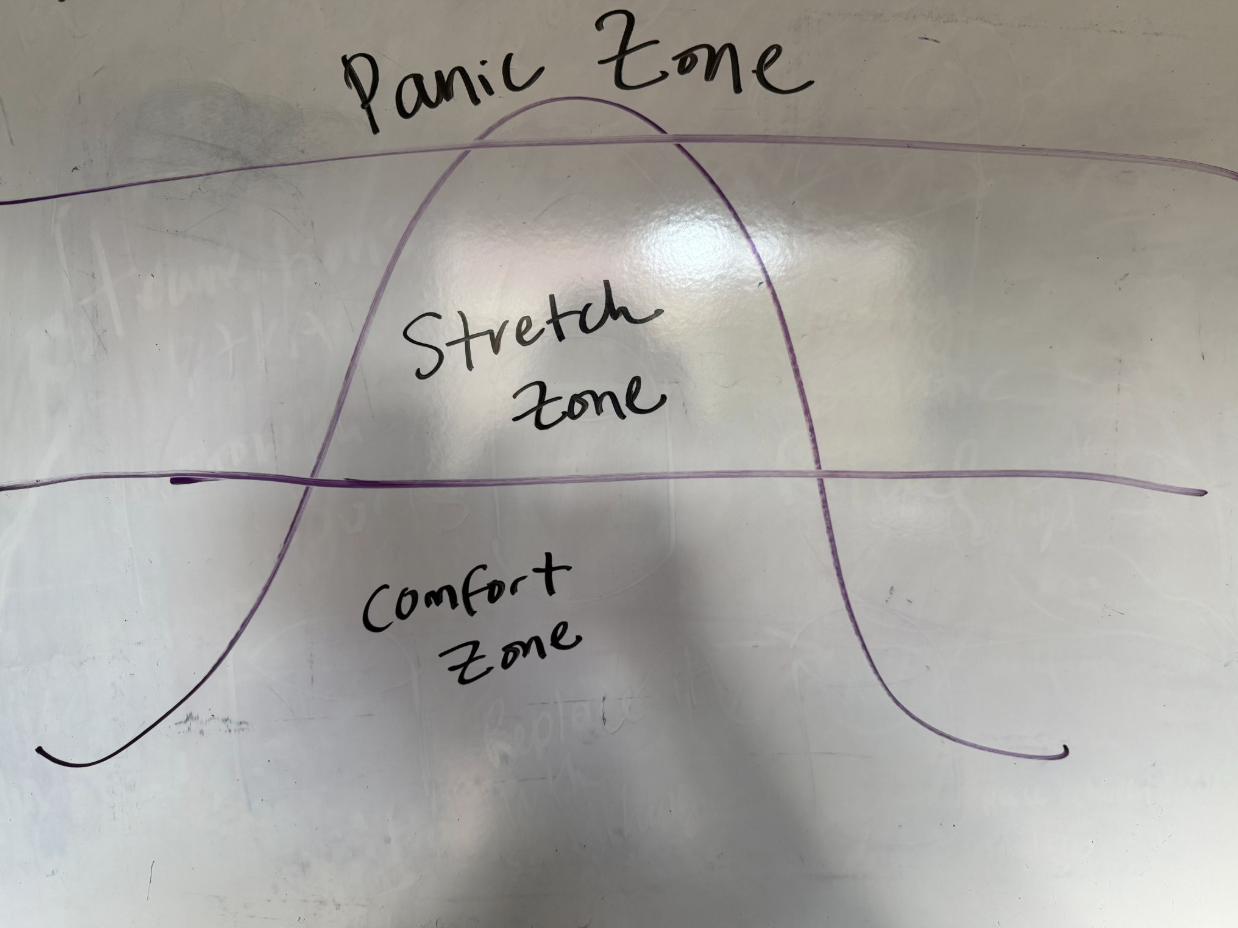
In this section of class, we’ll be tending primarily to the Comfort Zone and Stretch Zone in this model:
Bucket # 2 - Supporting the Nervous System Under Stress (When Things Go Wrong)
Because if you spend enough time outside - something often will eventually go wrong.
And in those moments, the skillset shifts.
Now you’re working with:
- Recognizing activation in real time (in yourself and who you are trying to support)
- Catching it early - hopefully when it’s a 2 or 4/10 instead of a 10/10
- Understanding common patterns like fight/flight/freeze
And then knowing: what does this moment actually need?
This part of class is about Reponse. We’ll be working with the Stretch Zone and the Panic Zone in this section, talking about the different kinds of support people need in these different nervous system states.
And then there’s the part that almost never gets talked about: what happens after the panic has passed? How do we help someone come down, make sense of what happened, and avoid a new stress injury? Maybe even finish with a sense of accomplishment (aka pronking)!
This is the terrain where we’re considering what supports situations that end in Post Traumatic-Growth - a very exciting outcome that can happen after outdoor intensity.
This is where a lot of the real learning lives.
Not just for instructors -
This is also why Luc and I have built: The Art of the Mother Duck: Nervous System–Centered Outdoor Leadership
It’s a reflection of the years we’ve spent in the field together.
The somatic nervous system skill-set I’ve spent time developing and applying to my own life and business.
And Luc’s work in the field, a place where he’s been able to integrate these skills with the reality of outdoor learning scenarios.
Technical skill and nervous system support aren’t separate. They’re two parts of the same leadership skill set.
It’s our hope that The Art of the Mother Duck can serve as the bridge between knowing what to do in an intense situation, and also how to support the human in front of you while you do it.
We’ll be teaching it in two 2-hour chunks over the course of two days this May 11 + 12. You can get the full details and sign up here.
This isn’t just for instructors.
You might be reading all of this and thinking, “Okay - that’s for guides or professionals” but it’s not. It’s for:
- Trip leaders (official or unofficial)
- Friends
- Partners
- Parents
- Anyone who spends time outside with other humans
And while we will focus on using these skills outdoors, they all translate to other parts of our lives, too.
At the end of the day, this isn’t just about better leadership (in whatever form you may be a leader!).
It’s about better experiences.
Better partnerships.
Better ways of showing up for each other.
I’m looking forward to sharing this magic with you, and hope to see you there ✨